

Evaluating Cane Before Splitting
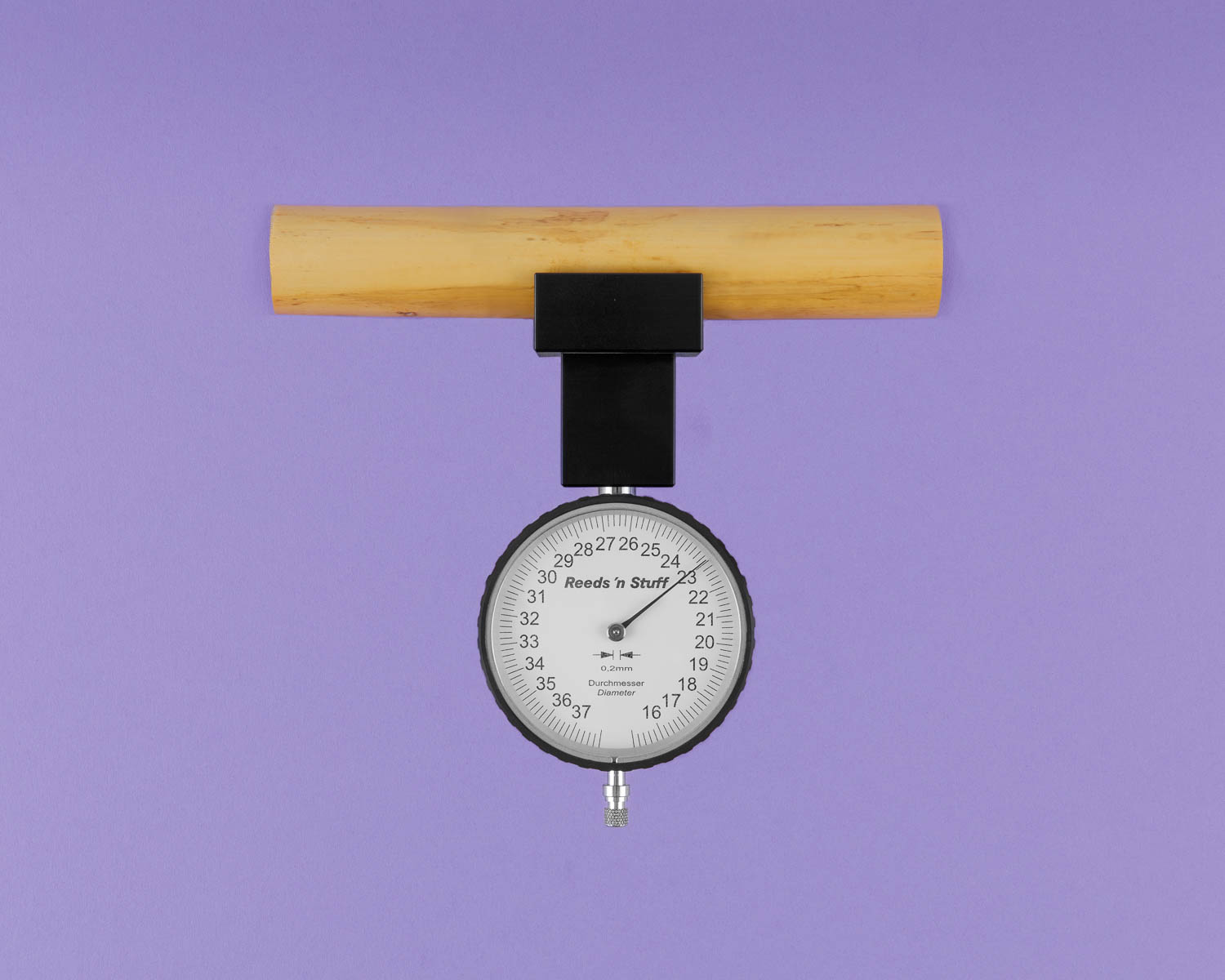
As cane is rarely perfectly symmetrical, it is best practice to take a moment and evaluate the cane before splitting the tube. Properly evaluating the cane before splitting ensures we are settings ourselves up for maximal success from the very beginning of the reed making process.
There are several criteria to use when evaluating the cane pre-splitting:
Color
The color of the cane should be a light golden-brown. Cane with a green tinge was either harvested too soon or not aged long enough. This cane is generally too soft to vibrate as we need it, and is therefore extremely unlikely to produce good reeds.
Grain
Take your thumb and run it over the surface of the tube cane, perpendicular to the length of the tube. Ideally the surface will be perfectly smooth. As cane is a natural product, there will almost always be imperfections. However, if your fingernail is consistently catching on deep grains then the cane is unlikely to produce good reeds. If the grain is relatively smooth it is more likely to produce good reeds.
Shape
When looking at the end of the tube cane, check to see how circular or oval-like the cane is shaped. This is one of the primary factors to consider when deciding how to place the cane on the cane splitter.
If the cane is oval- or egg-shaped, take special care when placing the cane so that as many usable segments as possible are produced.
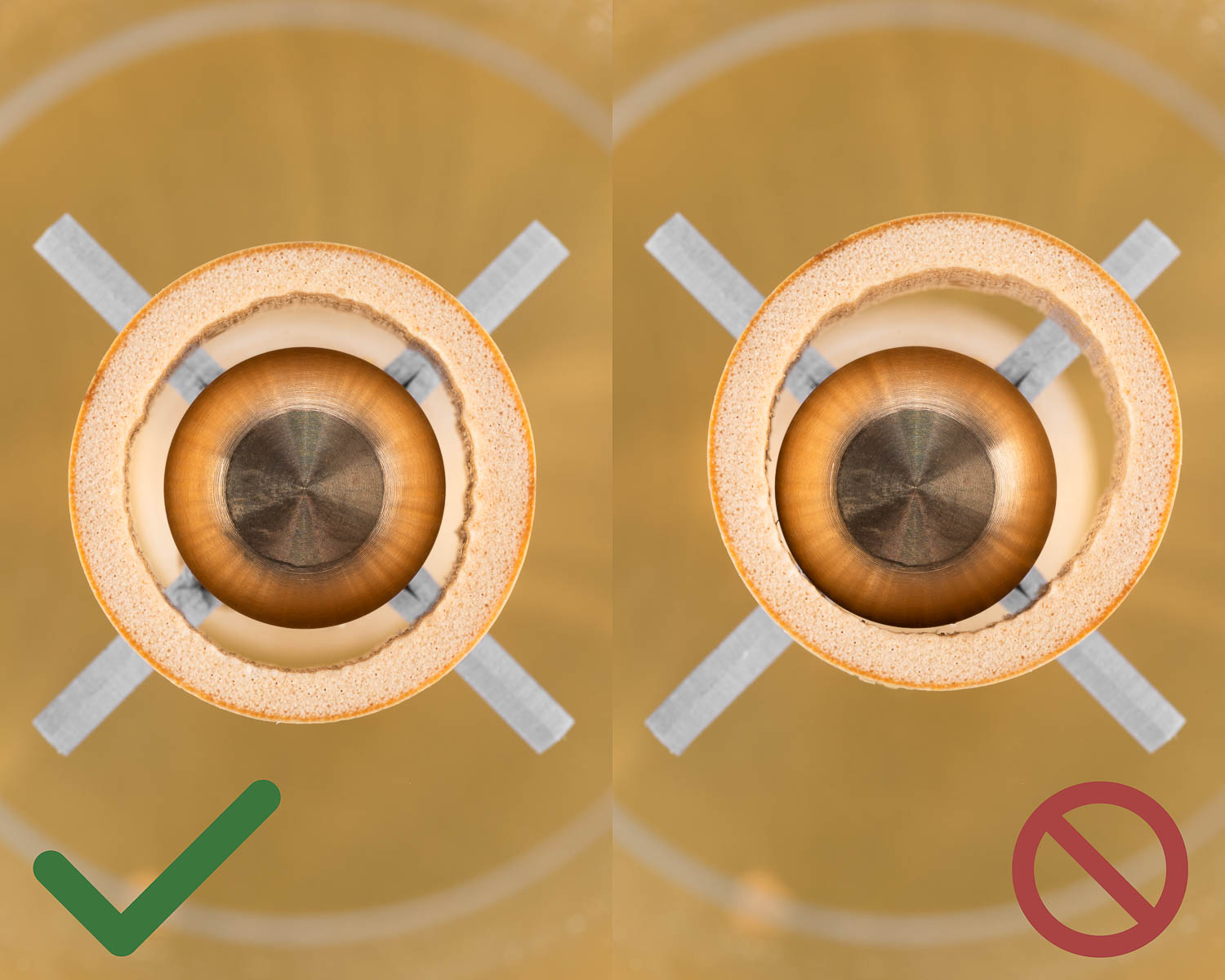
Each segment should be as symmetrical as possible within itself, so take care when placing the cane over the blades.
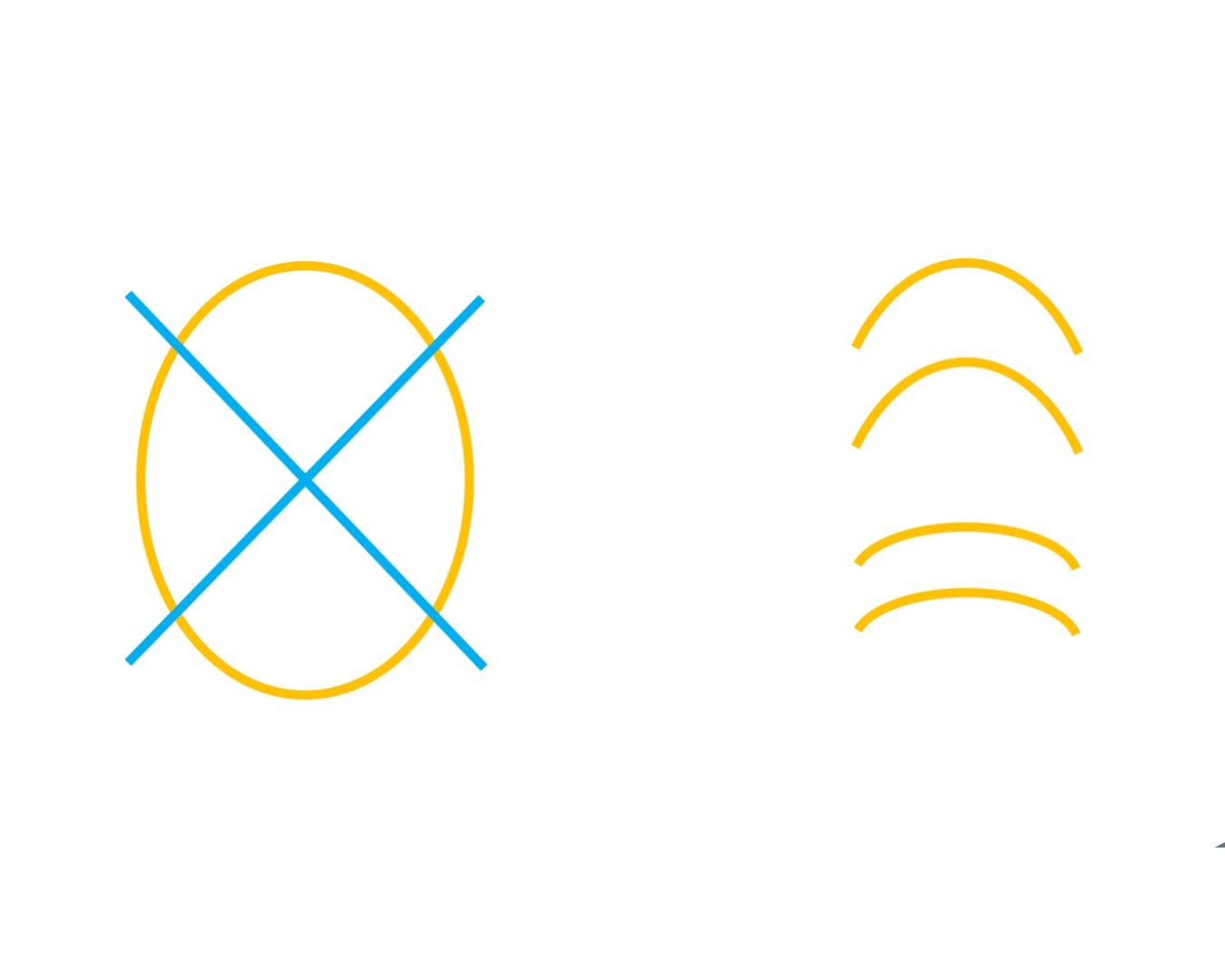
Splitting the cane against the oval seems at first counter-intuitive. However, when we look at the resulting splits we can see that the split pieces are symmetrical in themselves. This is exactly what we are looking for, even if it produces pieces of differing diameter.
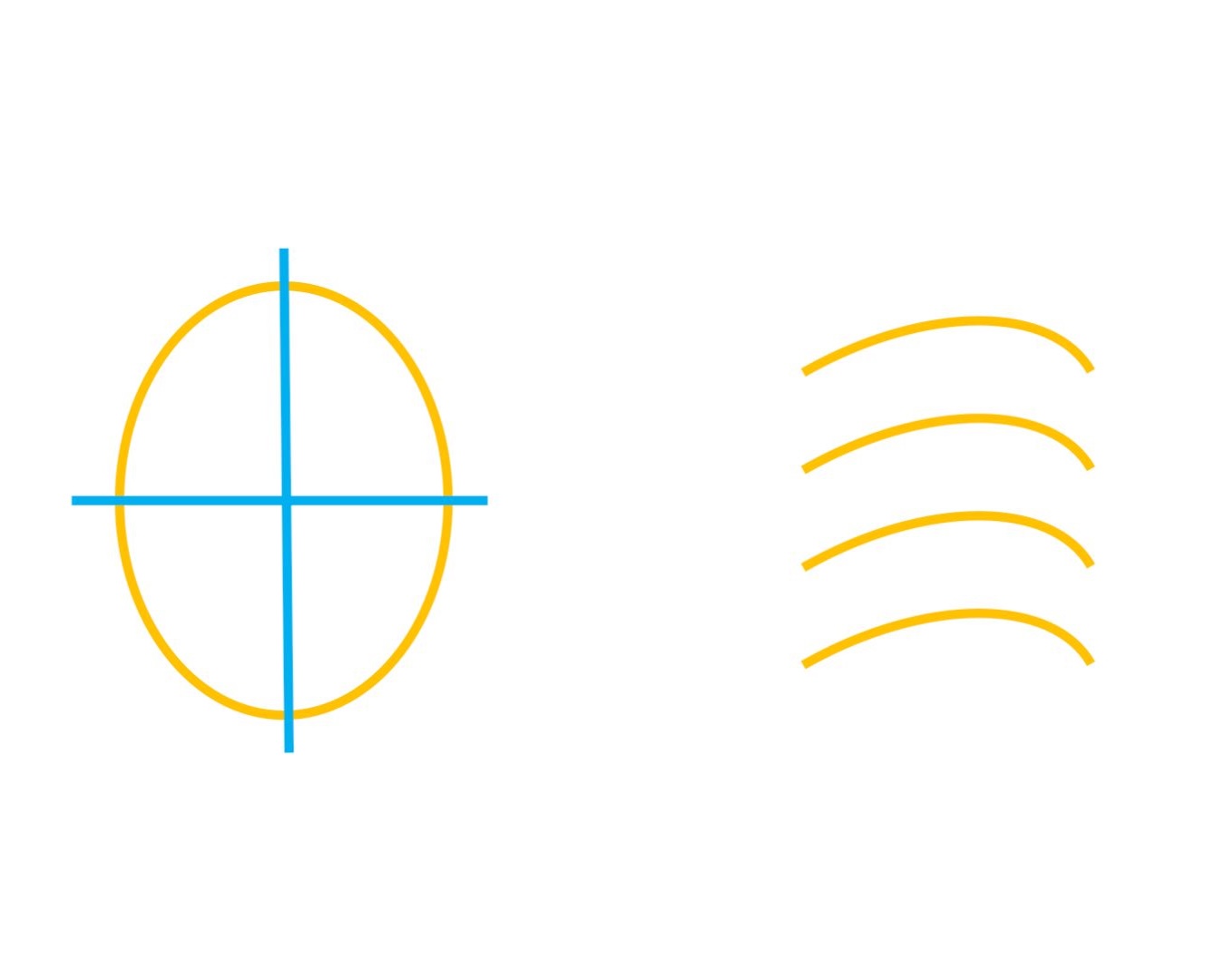
Splitting along the oval would produce 4 pieces that are more identical with each other, but each piece is asymmetrical within itself. As cane likes to retain its shape wherever possible, we can imagine how asymmetrical our tip openings would be when using these pieces.
Diameter
Once the cane is split into symmetrical pieces, this is when we recommend checking the individual pieces for diameter. A larger diameter piece will give you a reed opening that is naturally more closed, while a smaller diameter will give you a naturally more open tip opening.
Most important is that the pieces are symmetrical in themselves, as asymmetrical pieces will results in asymmetrical tip openings. Asymmetrical pieces can also lead to inaccurate diameter readings.
While some bassoonists prefer to split cane based on diameter measurements alone, we recommend incorporating it as one of several criteria for evaluating the cane.
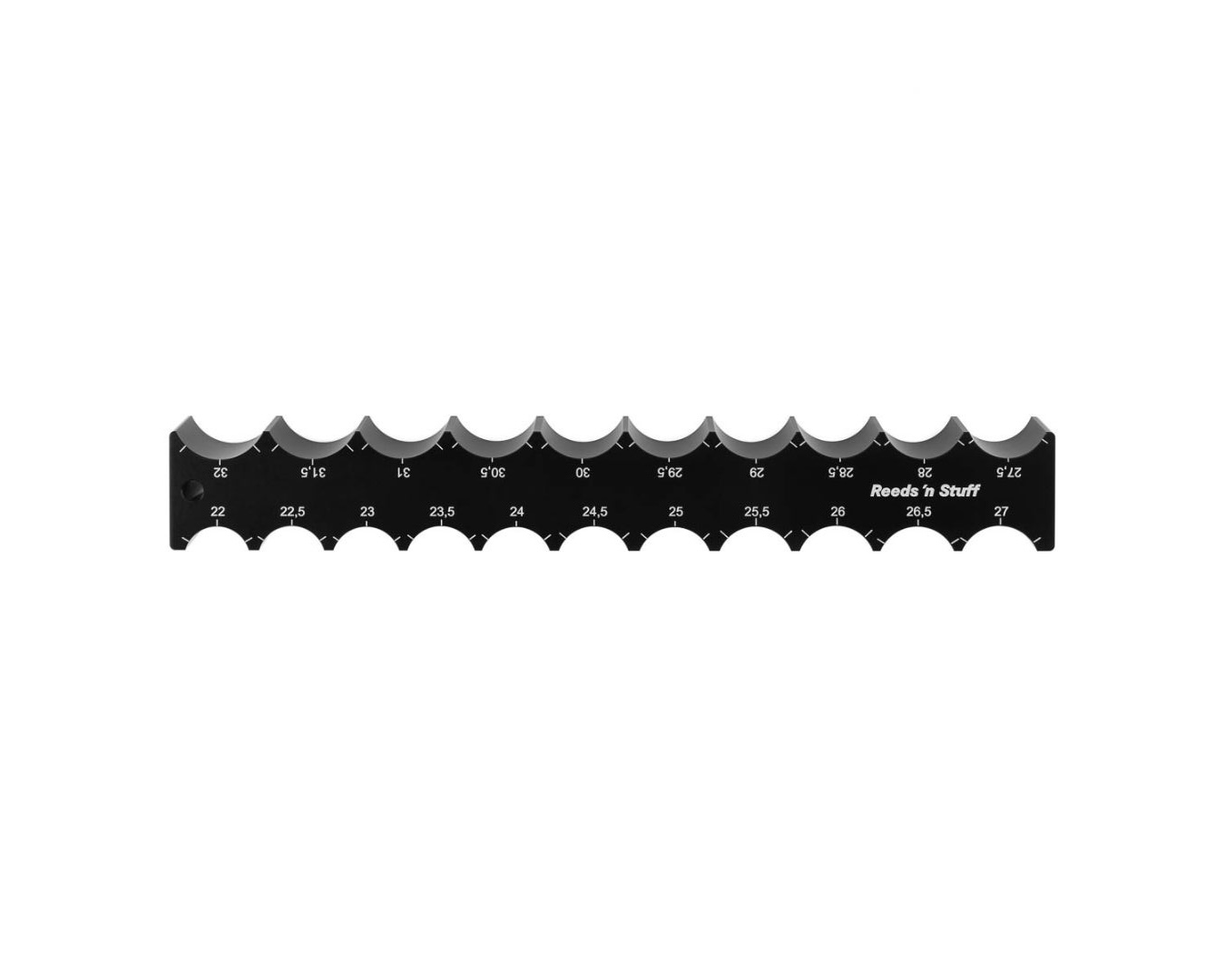
The diameter of each piece of cane can be measured by hand with a Diameter Gauge. Here you place the cane in an opening and check to see which opening it most closely aligns with to determine roughly the matching diameter.
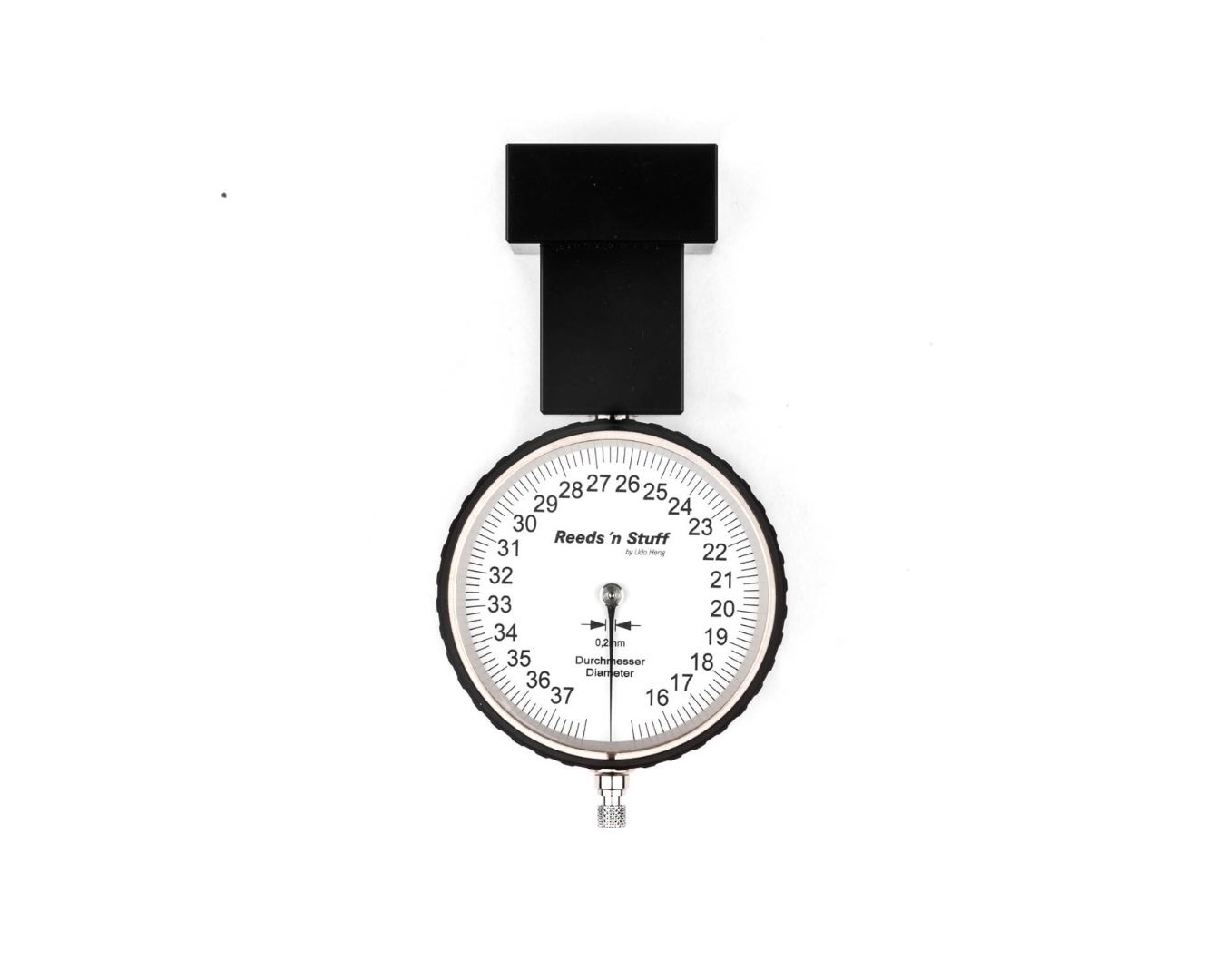
Much faster and more accurate is the Radius Dial Indicator, which is available with or without stand. Simply hold the cane up to the block and the dial will tell you what the diameter of the piece of cane is.
Clarity
If no decision can be made based on the shape of the tube cane, then the decision of where to split the cane can be made based upon the outer surface of the cane.
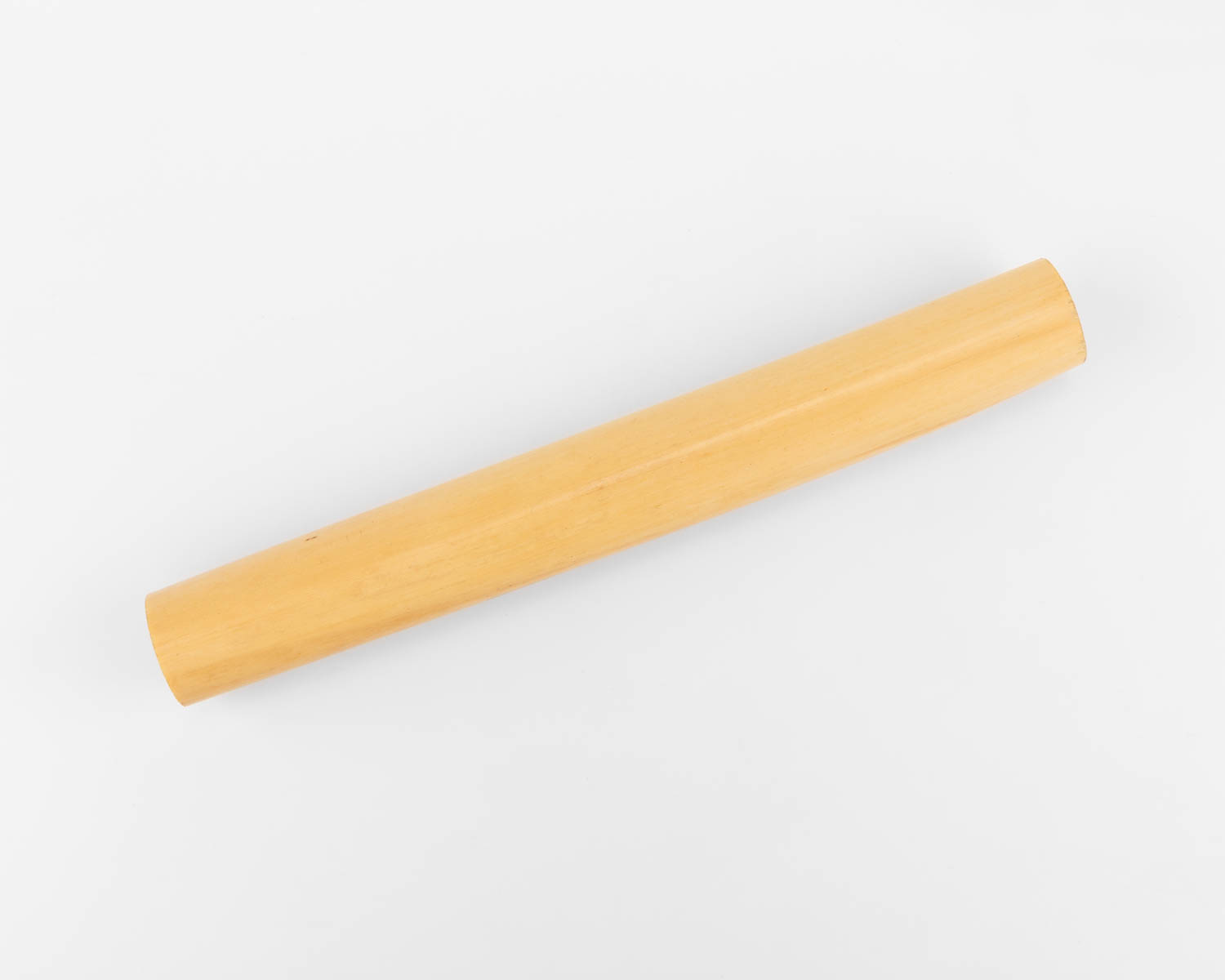
Ideally, we are looking for sections of the cane that are clean and without markings.
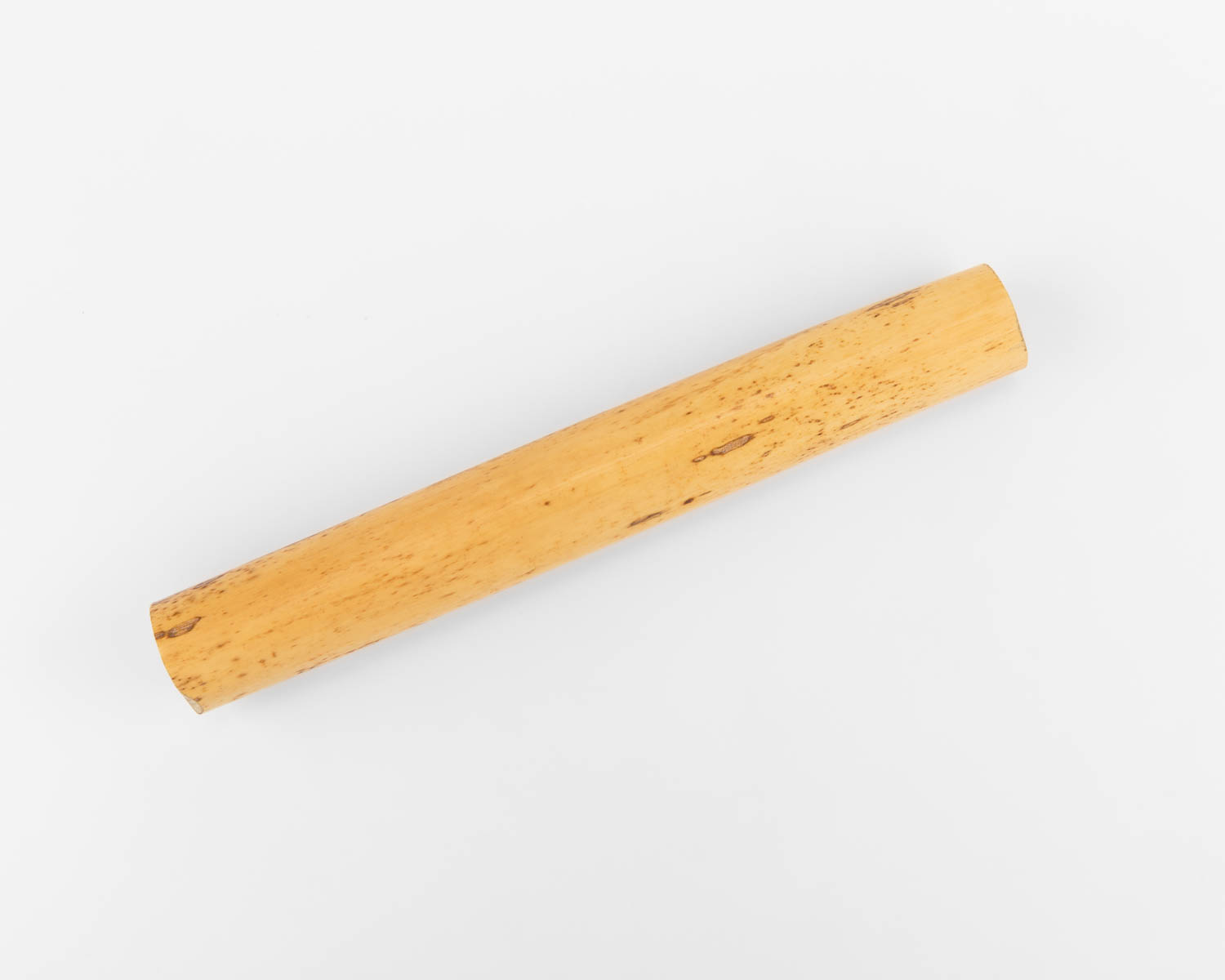
As not all cane will be perfectly clean, minimal markings on the surface are also acceptable.
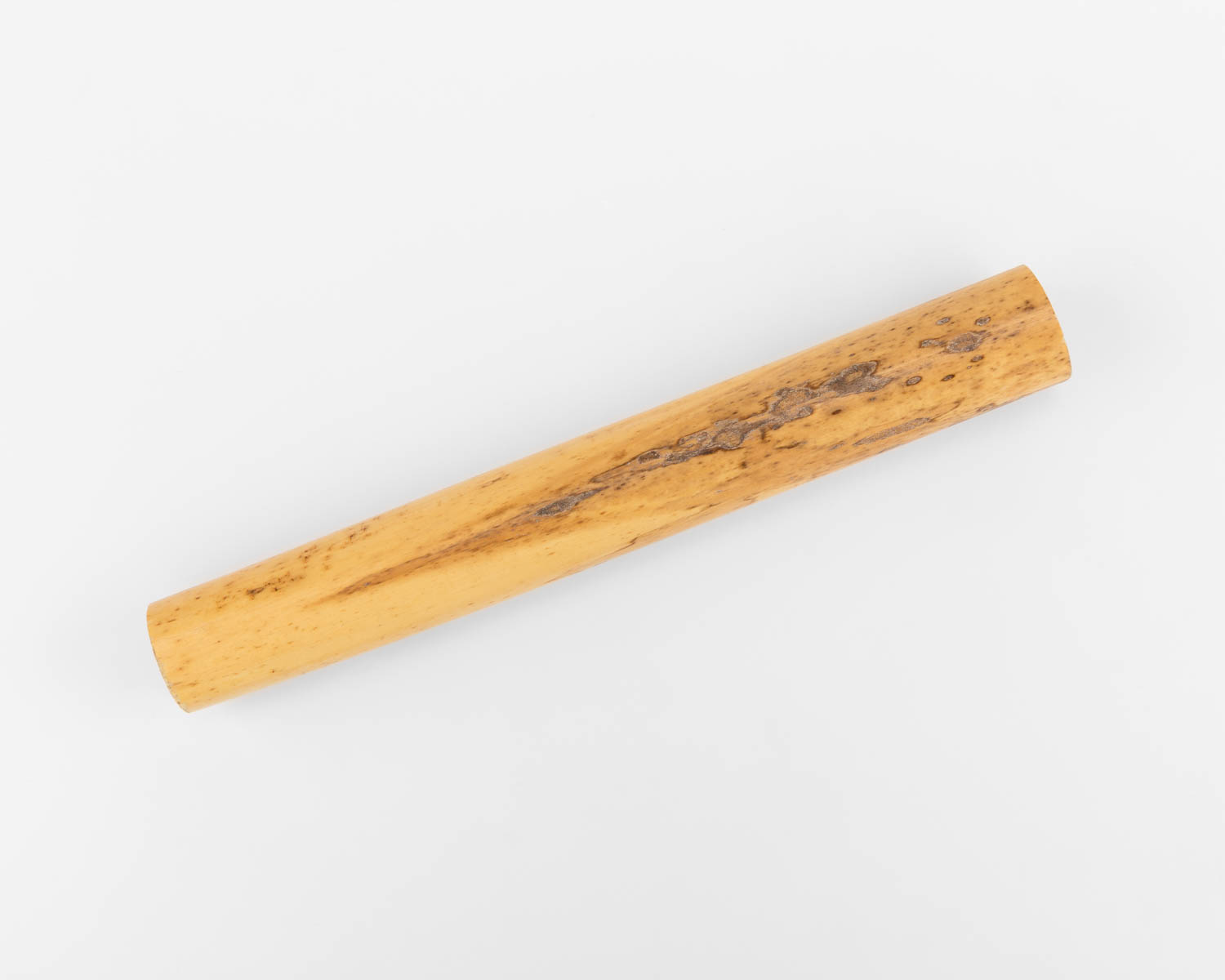
Cane that has an extreme amount of marking on the outside is less likely to produce good reeds. Be sure to differentiate cane marking and dirt that can be easily removed.
The bark under these markings is often thicker, which can lead to issues where after profiling there is still some bark left on the blade of the reed.
Take care to place the cane over the splitter such that as many of the sections where the cane is clean can be used. This will involve either:
- placing the cleanest segment between two blades to guarantee that it is used
- placing the least clean segment between two blades to remove it and maximize the usable cane for the rest of the tube
This can also involve placing a long thin run down the length of the tube exactly over the blade so that the split occurs along this line. This ensures that it will be removed during shaping.
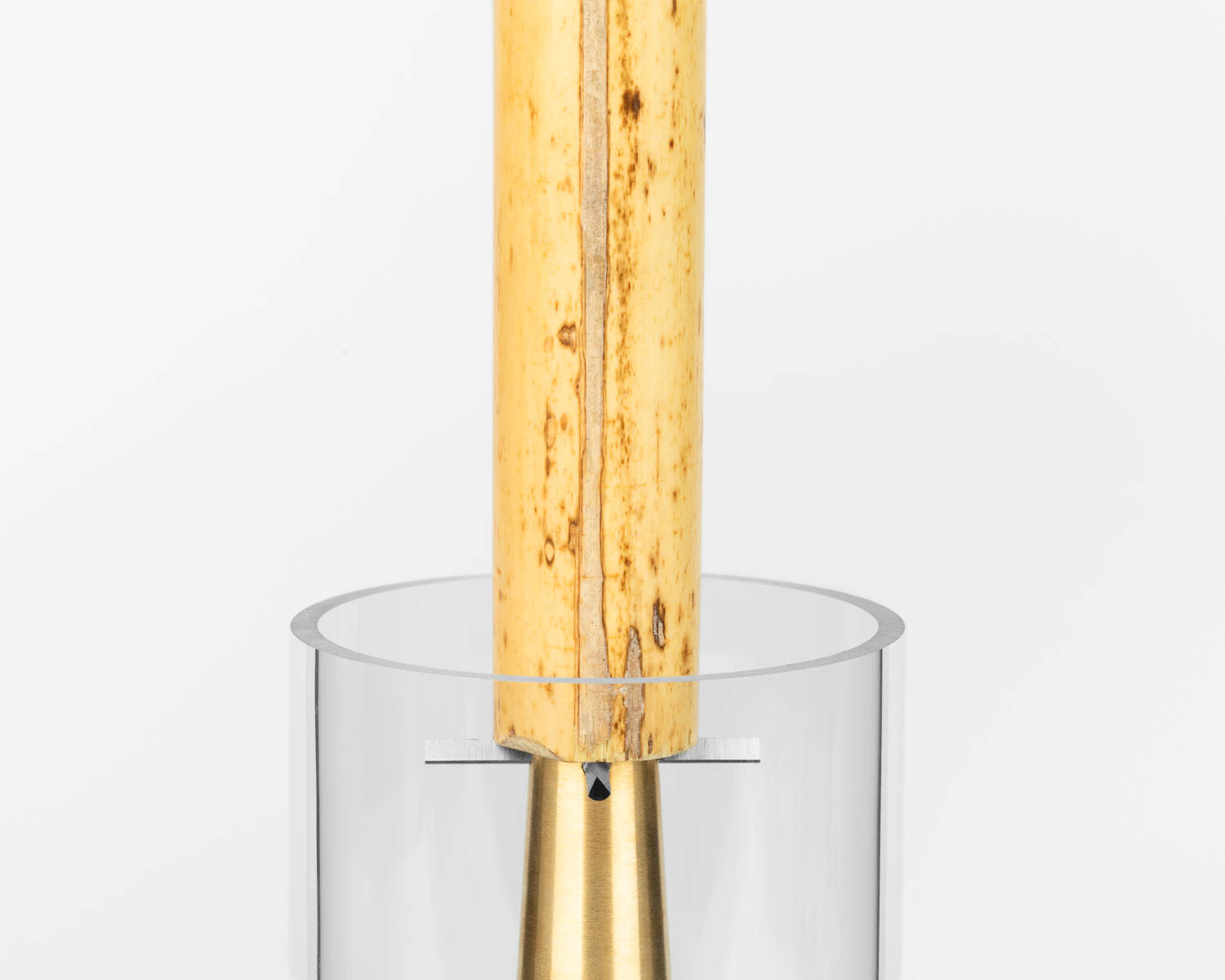
If the cane is of uniform color, grain, shape, diameter, and clarity then it is a rare magical piece that can be split symmetrically anywhere.
Disclaimer: some bassoonists prefer cane that is heavily marked. Some prefer to split cane based entirely on diameter. These are not rules set in stone, but rather guidelines to help orient those with less experience.