

Characteristics and Acoustics of Staples

There is a wide variety of oboe staples available on the market, each offering distinct acoustic and response characteristics. Several parameters should be considered when selecting the one that best suits our needs: length, general width, bottom diameter, tip shape and size, as well as the material.
Length
Staple length is the primary factor in adjusting overall pitch. Depending on the oboe and the reed shape used, a longer or shorter staple may be required. A shorter staple will raise the pitch, while a longer staple will lower the pitch.
It should be noted that tuning changes are not uniform across the entire range of the instrument; therefore, drastic changes in length can compromise intonation balance between registers.
Overall Bore Size
A wider internal bore results in a higher overall pitch and reduced resistance, though it requires greater breath support. Conversely, a narrower bore provides more resistance and lower pitch.
Bottom Diameter
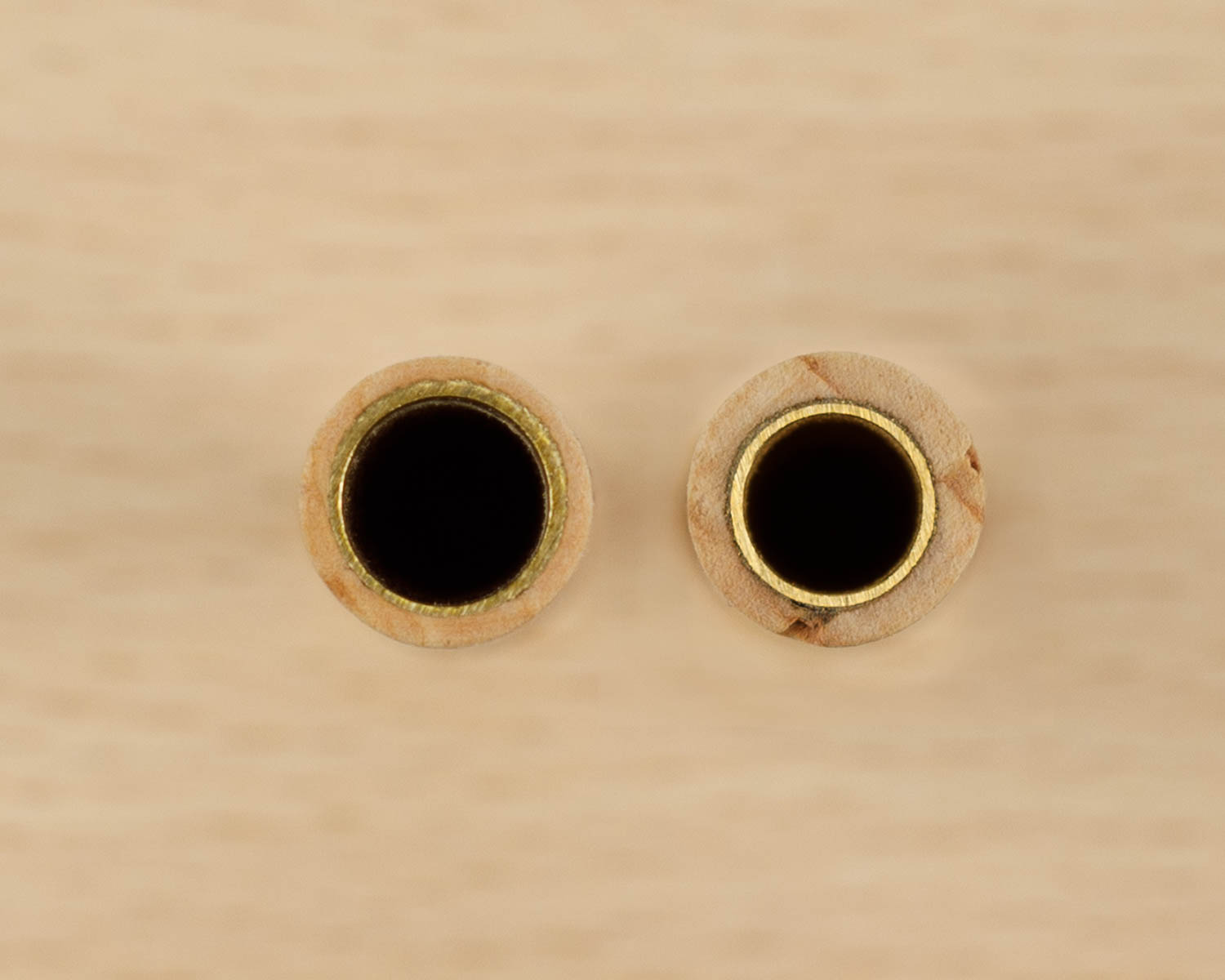
When referring to the bottom diameter, we are talking about the size of the opening of the staple at the end of the staple with the cork on it. The sizing refers to the internal dimension of the opening, not the overall width of the staple.
| Larger Diameter | Smaller Diameter | |
|---|---|---|
| Tuning | Lowers pitch in the first octave, increasingly so as the air column shortens. C♯5 and D5 also tend to lower in pitch, while G5 – C6 become progressively sharper. |
Raises pitch in the first octave, increasingly so as the air column shortens. C♯5 and D5 tend to rise in pitch, while G5 – C6 become progressively flatter. |
| Sound | More powerful low register, though sometimes difficult to control. Increased flexibility. |
Warmer, more focused low register that is easier to control. Requires more air pressure, reduces flexibility, and may limit dynamic range. |
Top Opening
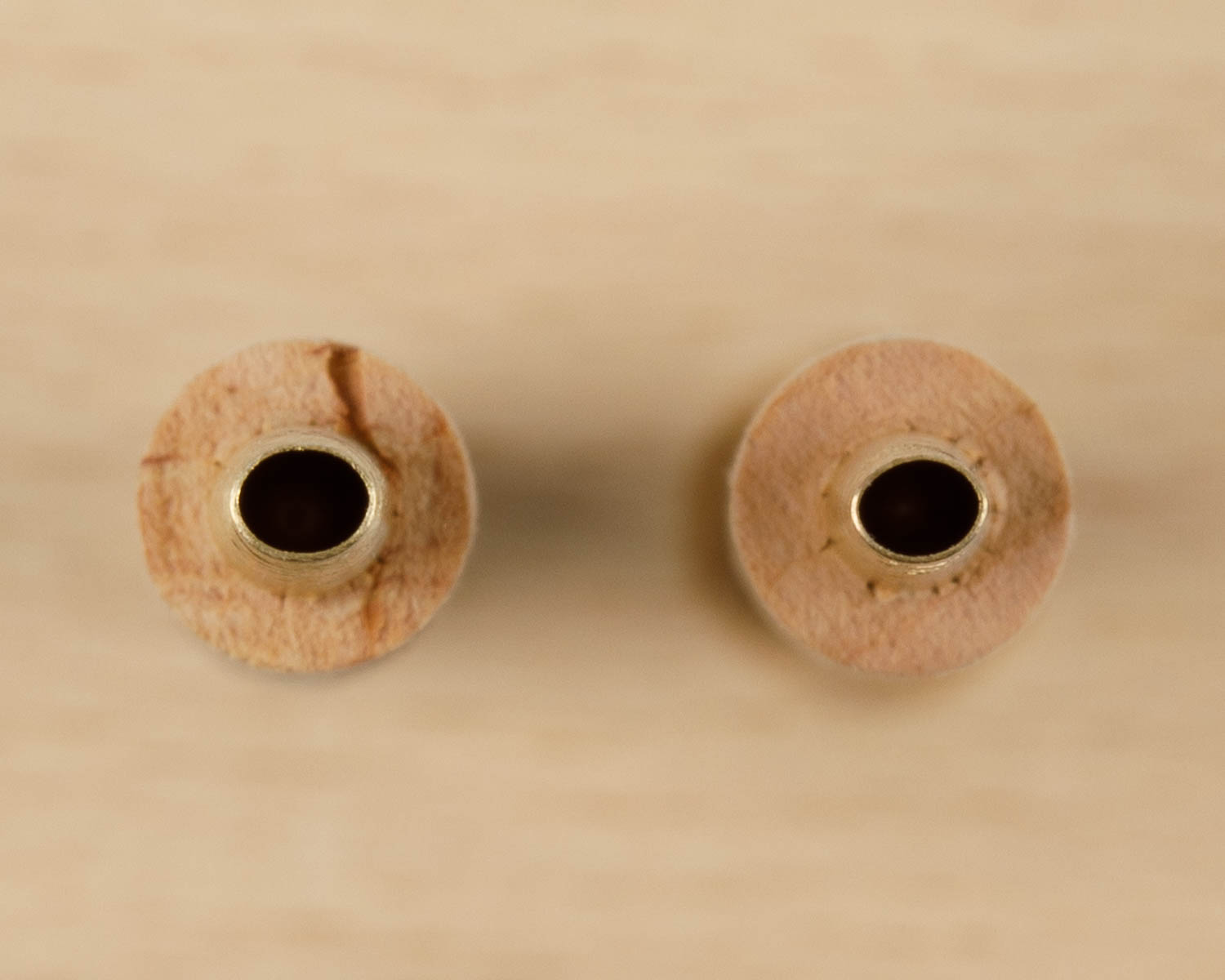
Similarly, a different shape at the top opening of the staple will have the following effects on our playing.
As a general principle, increasing the tip opening can compensate for a narrower base diameter, and vice versa.
| Smaller Opening | Larger Opening | |
|---|---|---|
| Tuning | Raises pitch in the first octave and gradually lowers it from F5 to C6. |
Lowers pitch in the first octave and progressively raises it from E5 to C6. Often beneficial for improving second-octave intonation. |
| Sound | More focused sound with greater resistance. | Increases flexibility and broadens dynamic range. |
Top Shape
The contour of the staple’s upper opening directly influences reed aperture.

A more oval shape tends to close the reed, facilitating the third octave.

A more rounded shape will open more the reed and provide more volume and stability in the second octave.
Wall Thickness
Some staples have a thinner wall. This allow freer vibration, resulting in reeds with less resistance. This can also result in a brighter sound.
Another factor to consider is that a thinner wall means a smaller external diameter, which will result in us having to tie the reed slightly longer.
For example, Marigaux Superleggera and Marigaux 2 are thinner walled staples.
Materials
While brass is the most common material for oboe staples, other metals and alloys can impart distinct tonal colors and response characteristics:
| Characteristics | |
|---|---|
| Brass | The most common material due to its sweet sound. Typically 70% copper – 30% zinc. Guercio uses an alloy with more copper for its D11 and D12 models, producing a warmer but less vibrant sound. |
| German Silver (Nickel-Silver) | Produces a brilliant sound with more projection. Typically composed of 60% copper, 20% nickel, 20% zinc. |
| Bronze | Produces a darker sound. Typically composed of 88% copper, 12% tin. |
| Silver | Slightly metallic and hard sound. |
| Gold | Smoother and more elegant sound. Considerably more expensive. |
Some brass staples are plated with other metals to achieve specific tonal effects:
| Characteristics | |
|---|---|
| Silver | Slightly gentler than standard brass. |
| Gold | Warm and sweet sound. |
| Copper | Darker sound with a bit more resistance. |
| Rhodium | Robust and focused sound. |
| Ruthenium | Bright and clear sound. |
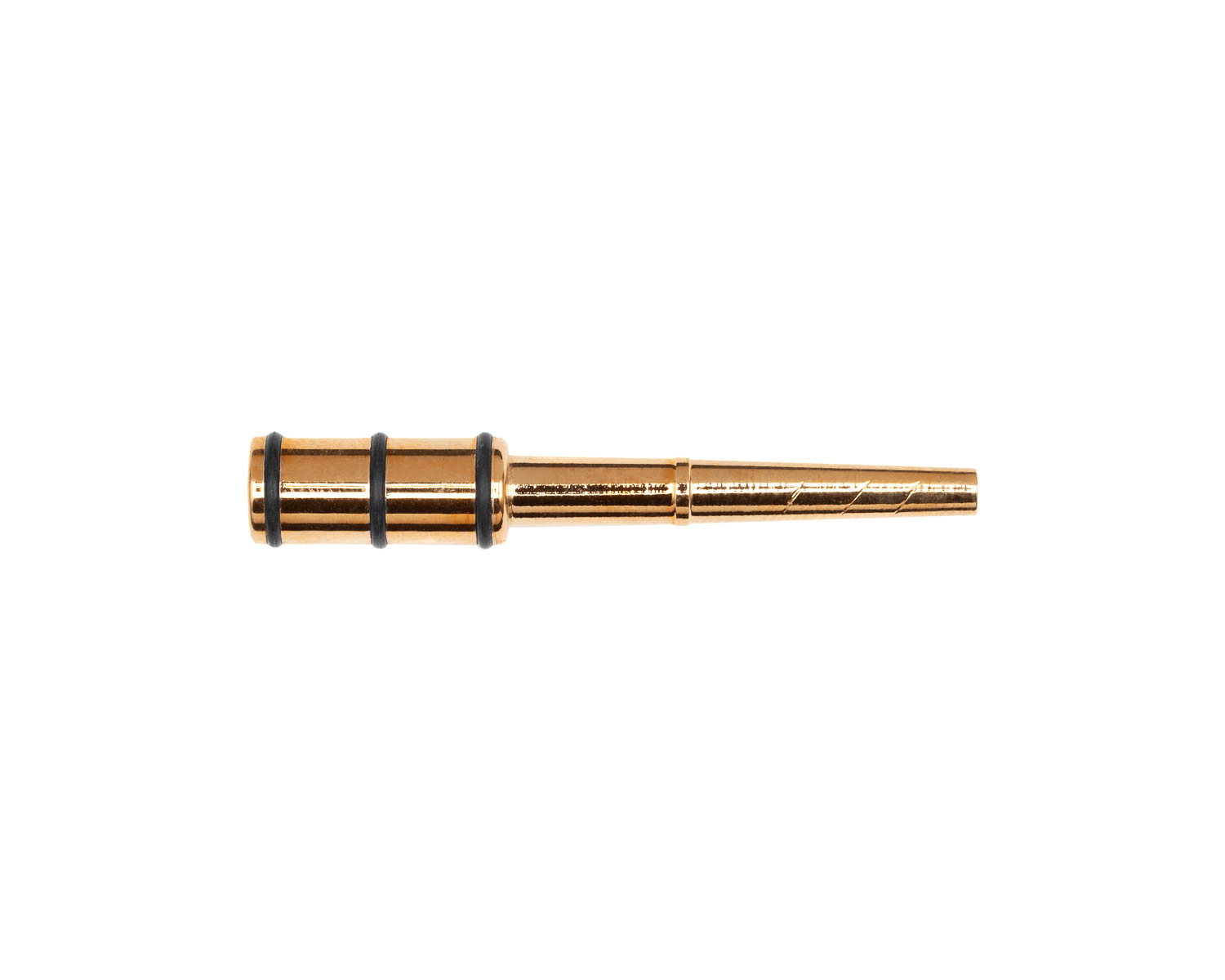
Staples without Cork
Some staples are produced with rubber O-rings instead of cork. This provides a more uniform sound across the entire range of the oboe and greater projection.
For some oboe players the sound may become slightly brighter.
March 30, 2026
Guide Oboe