
A Classic Revived
A central point of the Herzberg system is that the measurements are taken from the fold. The reed is not first understood as a finished object measured from the tip. Instead, the reed maker establishes where the shaped cane will be used by measuring from the fold to the collar, from the fold to the butt cut-off, and from the fold to the wire placements. This is one of the defining features of the Herzberg method.
The original Herzberg shape has two important features that make this possible:
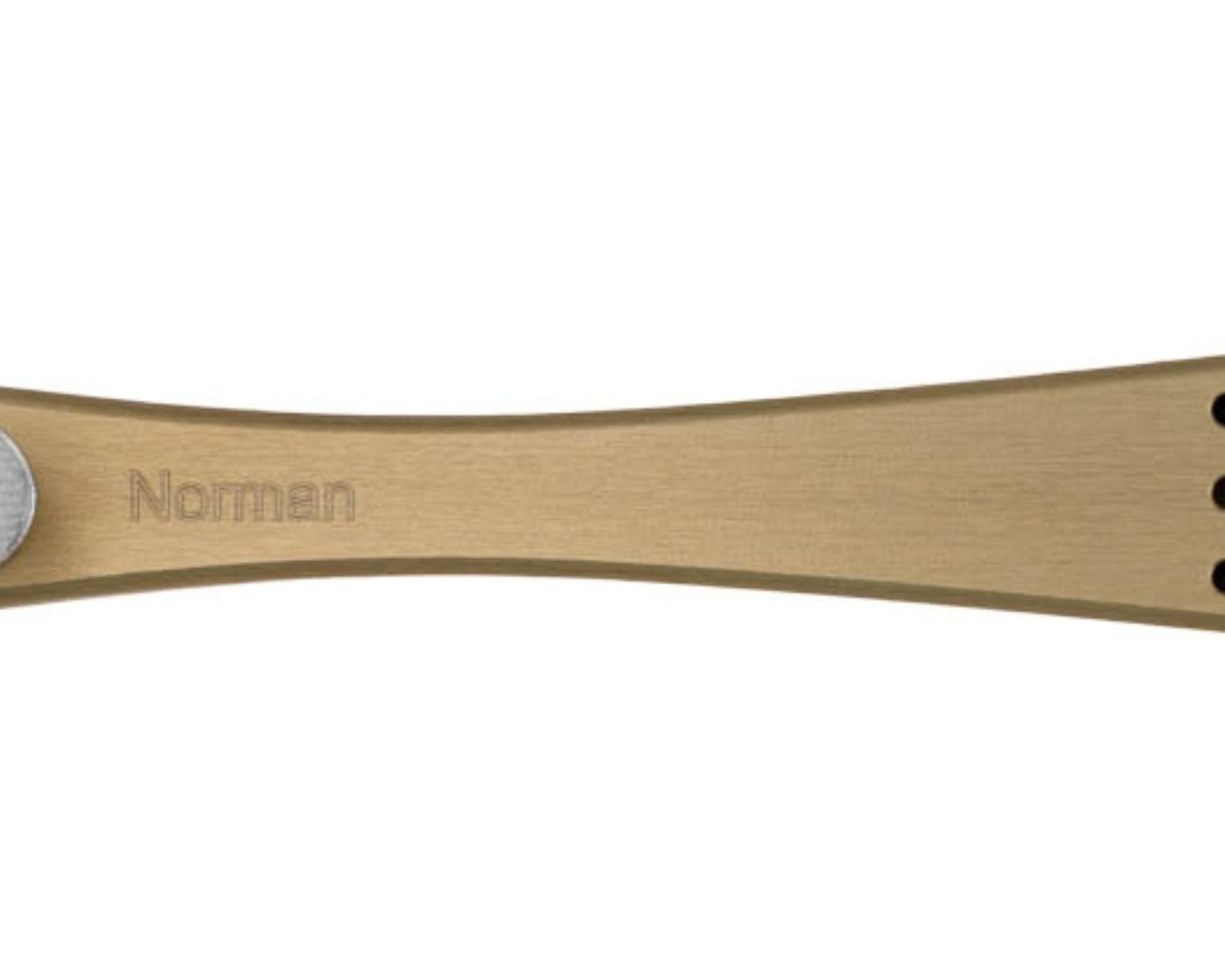
It has an extended narrow region rather than a single abrupt narrow point. The reed maker can move the working reed forward or backward on the shape while preserving the internal relationships among the collar, butt, wires, bevel, and tip.
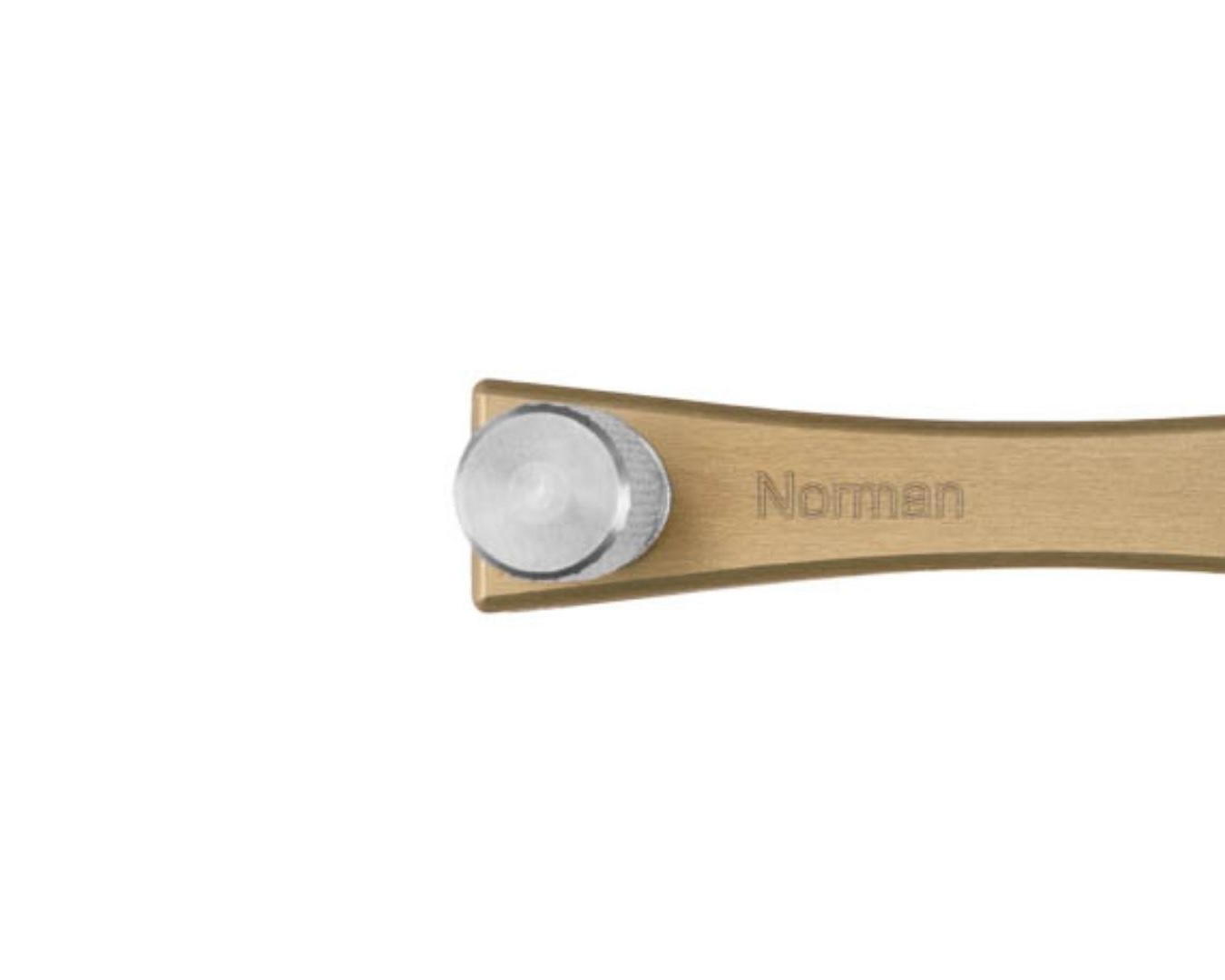
It has sufficient flare at the end to support the Herzberg bevel methods.
Many Herzberg-style copies miss one or both of these features. Some copies reduce the shape to a single narrow point. Others do not flare widely enough at the butt. Either version limits the method. A single narrow point reduces the reed maker’s ability to move the reed forward or backward on the shape. Insufficient end flare makes it difficult to execute the bevel without weakening the tube or compromising the fit on the bocal.
The Norman shape was made specifically to address this problem. It was copied from two original Herzberg shapers, sourced and provided by Matthew Harvell, in order to recover the functional geometry of the original: the extended narrow region, the proper butt flare, and the positional flexibility required by the Herzberg system.
To learn more about Herzberg's process and the various ways he used his shape, check out our Reedolino article Norman vs. Herzberg.
Durable & Precise
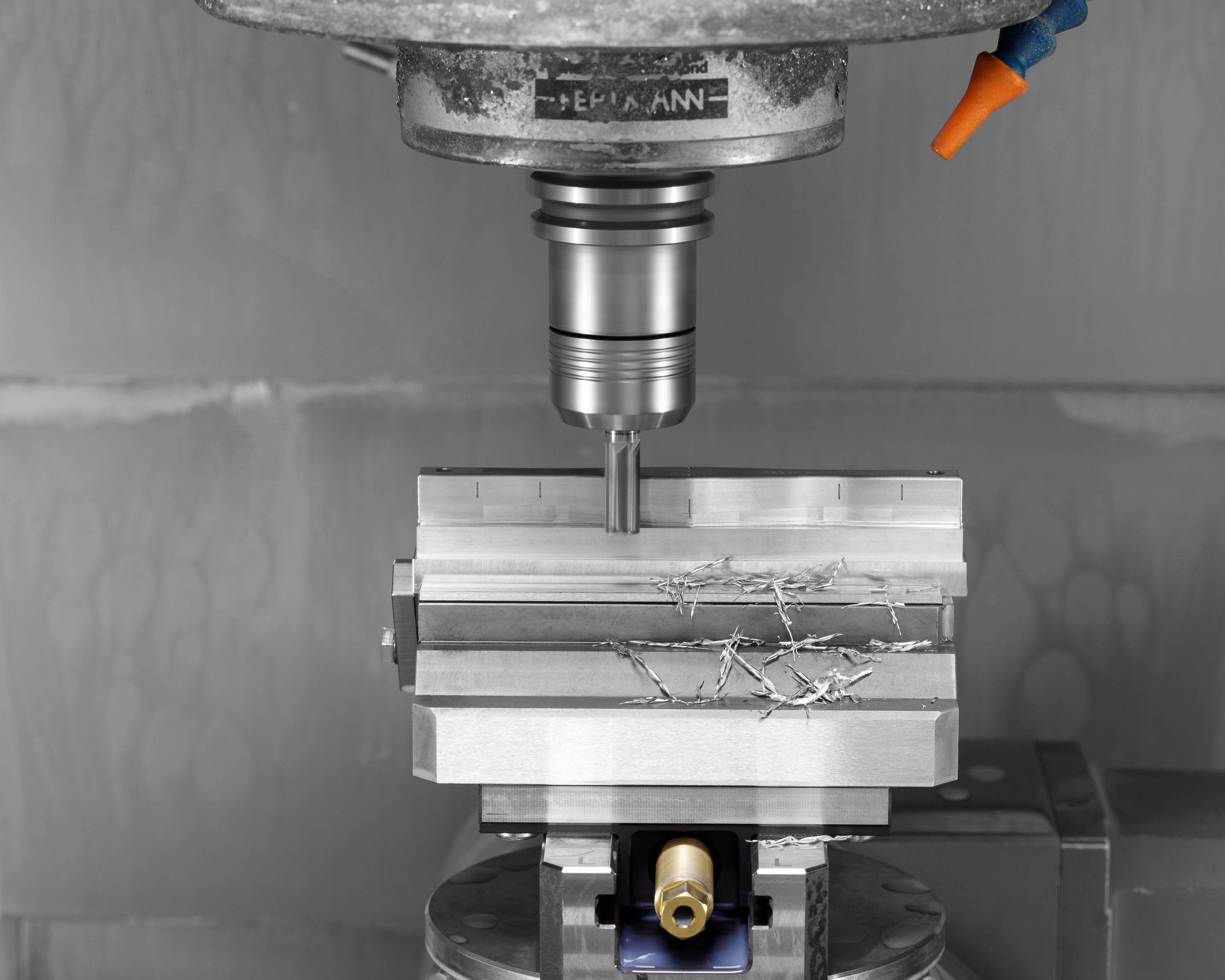
The production of our Straight Shapers requires the highest level of precision and involves several elaborate machining steps. Modern CNC technology ensures an exact contour and consistently high quality.
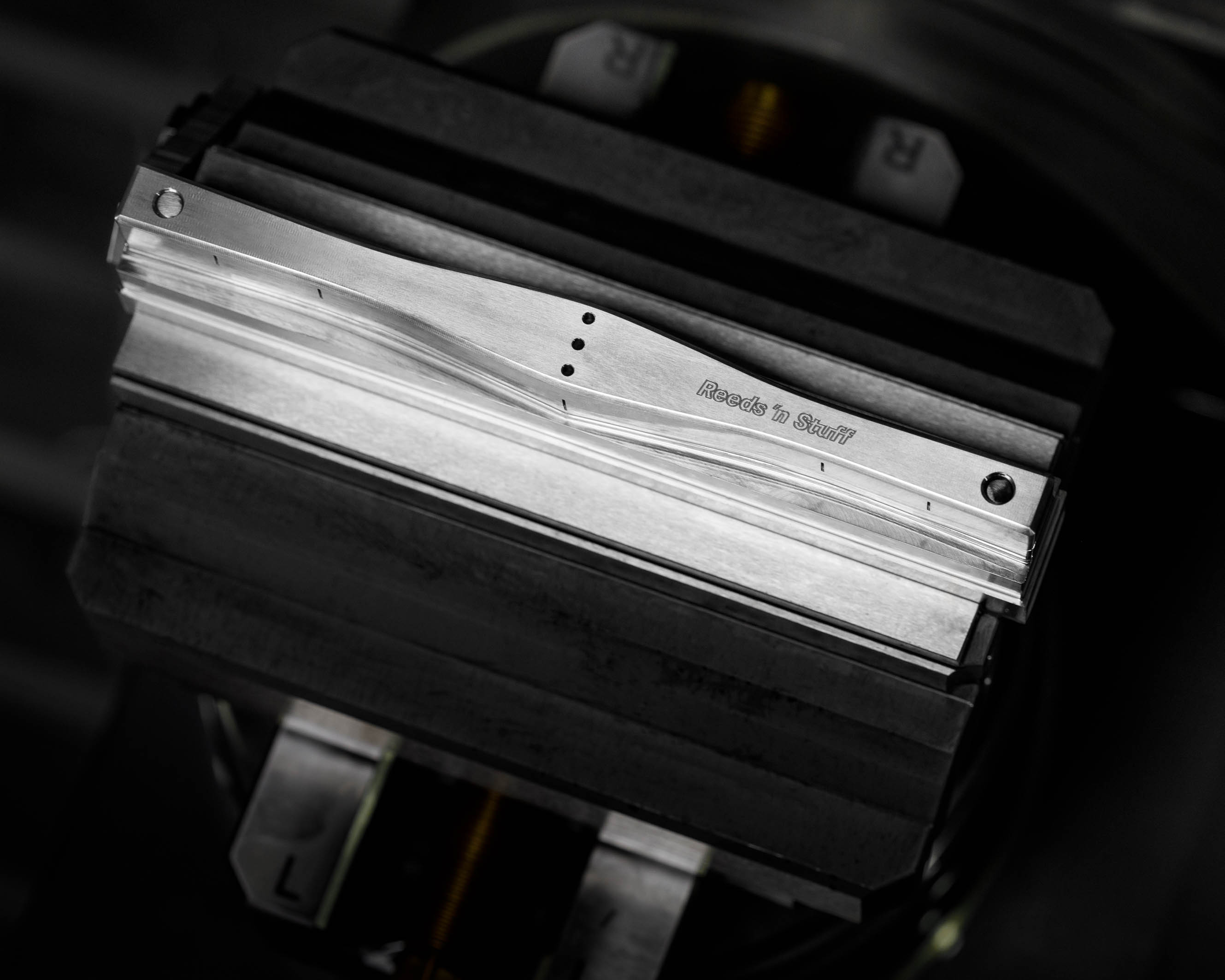
Combined with a specially tailored hardening process, this results in exceptionally dimensionally stable and durable tools. The result is a hand-operated reed shaper that enables precise, comfortable, and reproducible work.
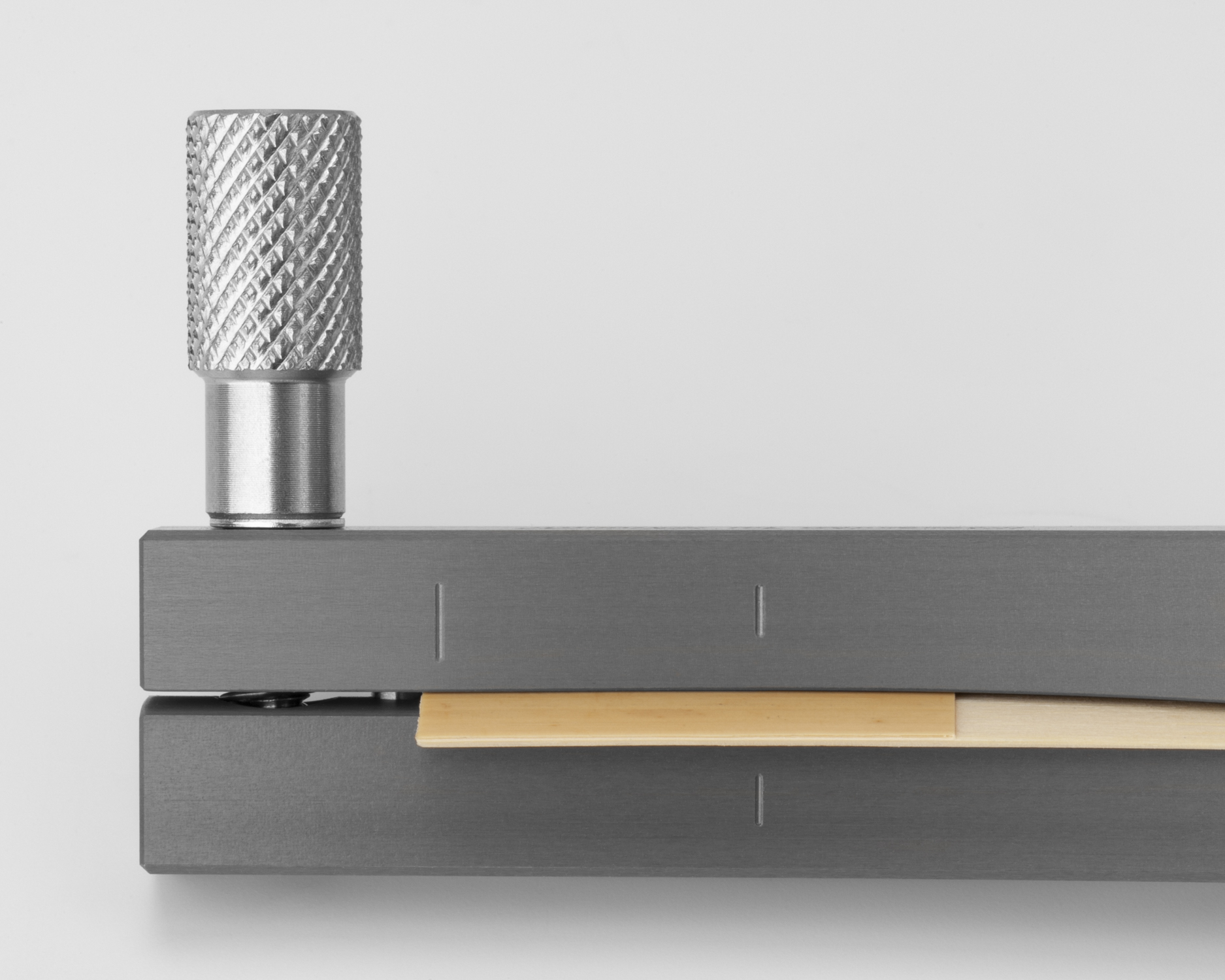
The pair of engraved lines on the sides mark the narrowest point of the shape and are an important tool for precise shaping. For optimal shape transfer, shape from both sides towards this narrowest point.
The outermost lines are to help center shorter cane (118 mm for bassoon, 148 mm for contrabassoon).

Thanks to the silicone tips, both gouged and profiled cane can be shaped.
The silicone tips secure the thinner parts of the profiled cane in the center and prevent the cane from slipping.
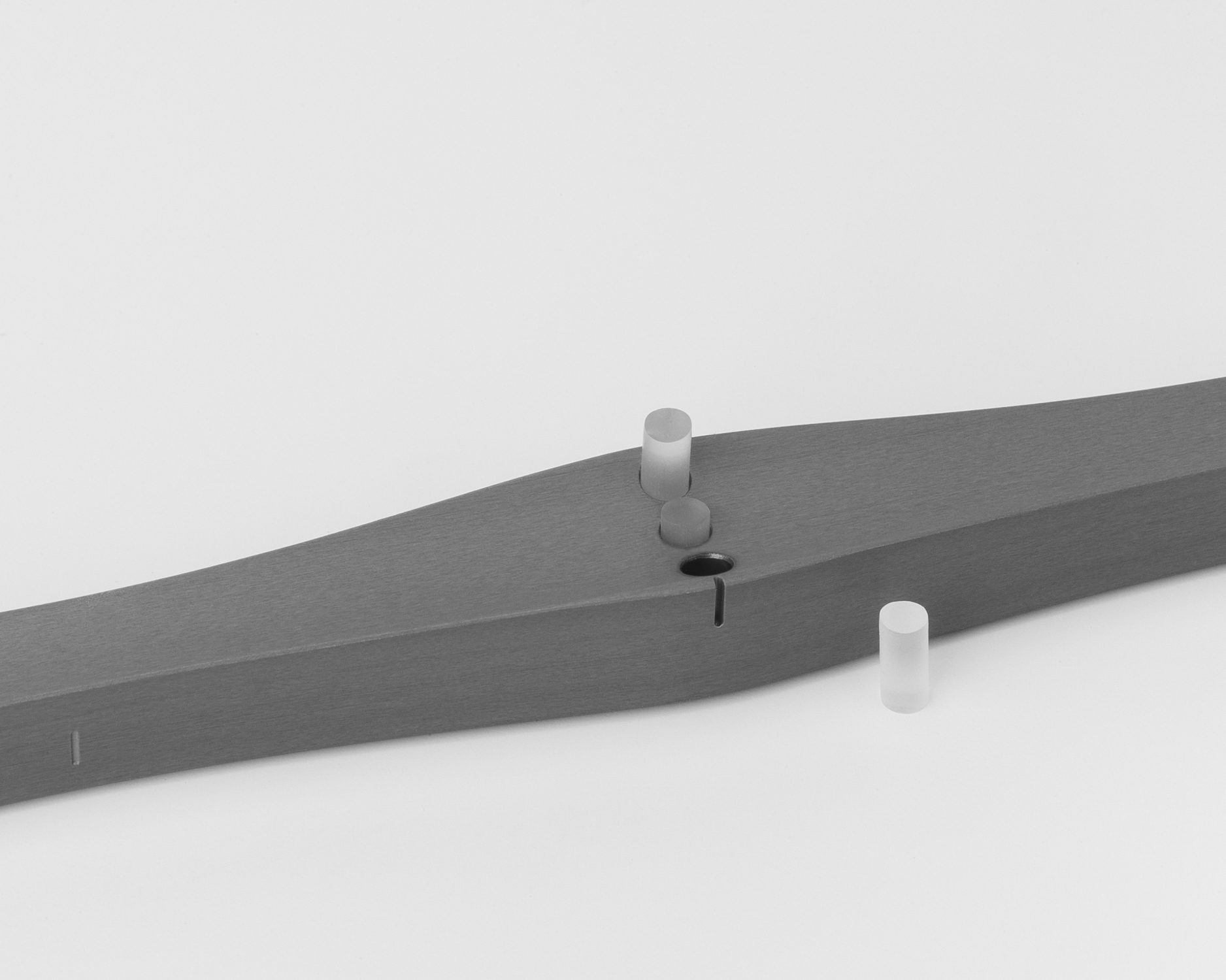
The silicone tips can be removed and replaced as desired, especially when shaping unprofiled cane.

Variety of Shapes
Our range of straight shapers impresses with an extraordinary variety of shapes. From classic to custom shapes, the different contours and designs provide precise results and maximum creative freedom.
View all handheld pattern cutters
- Size
- Instrument
- Bassoon
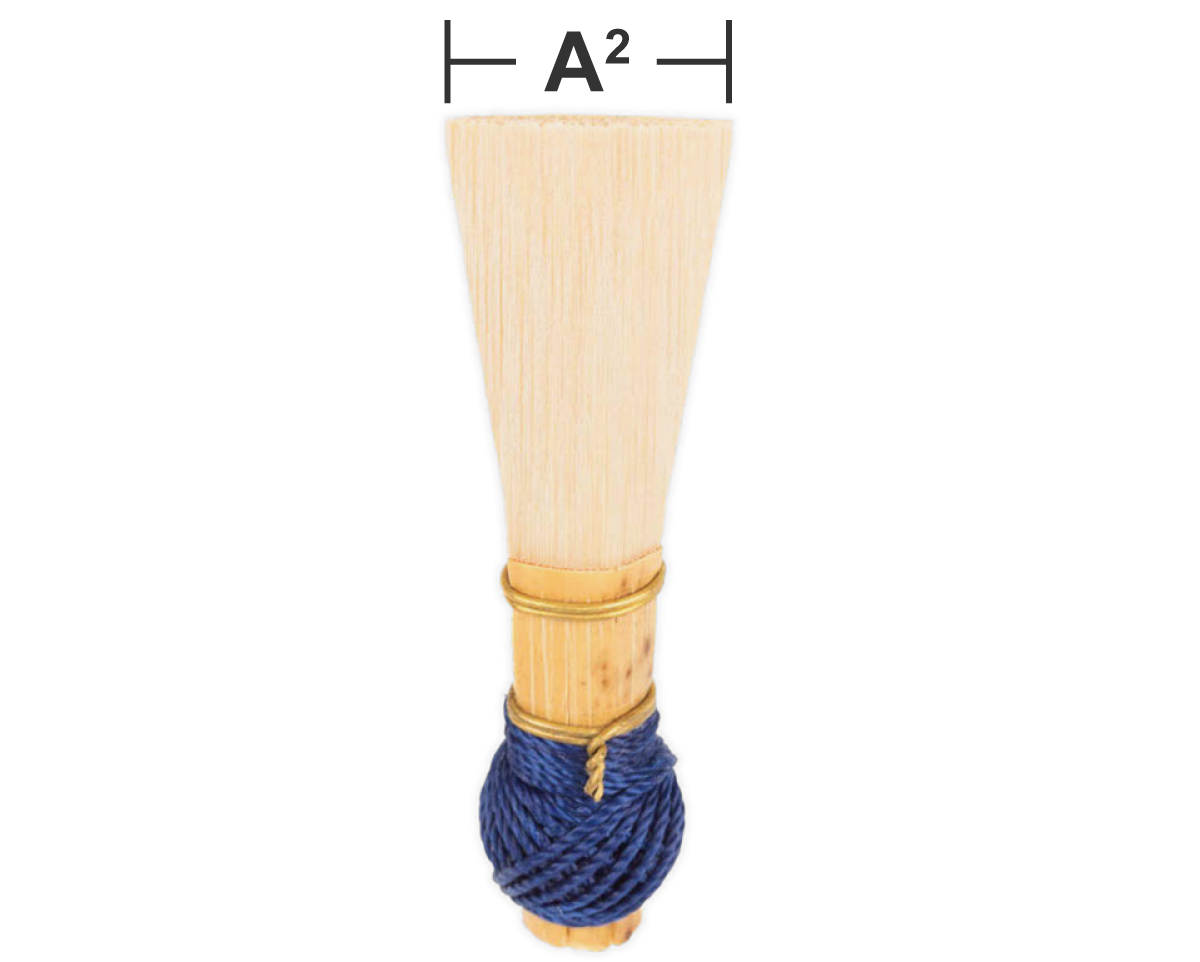
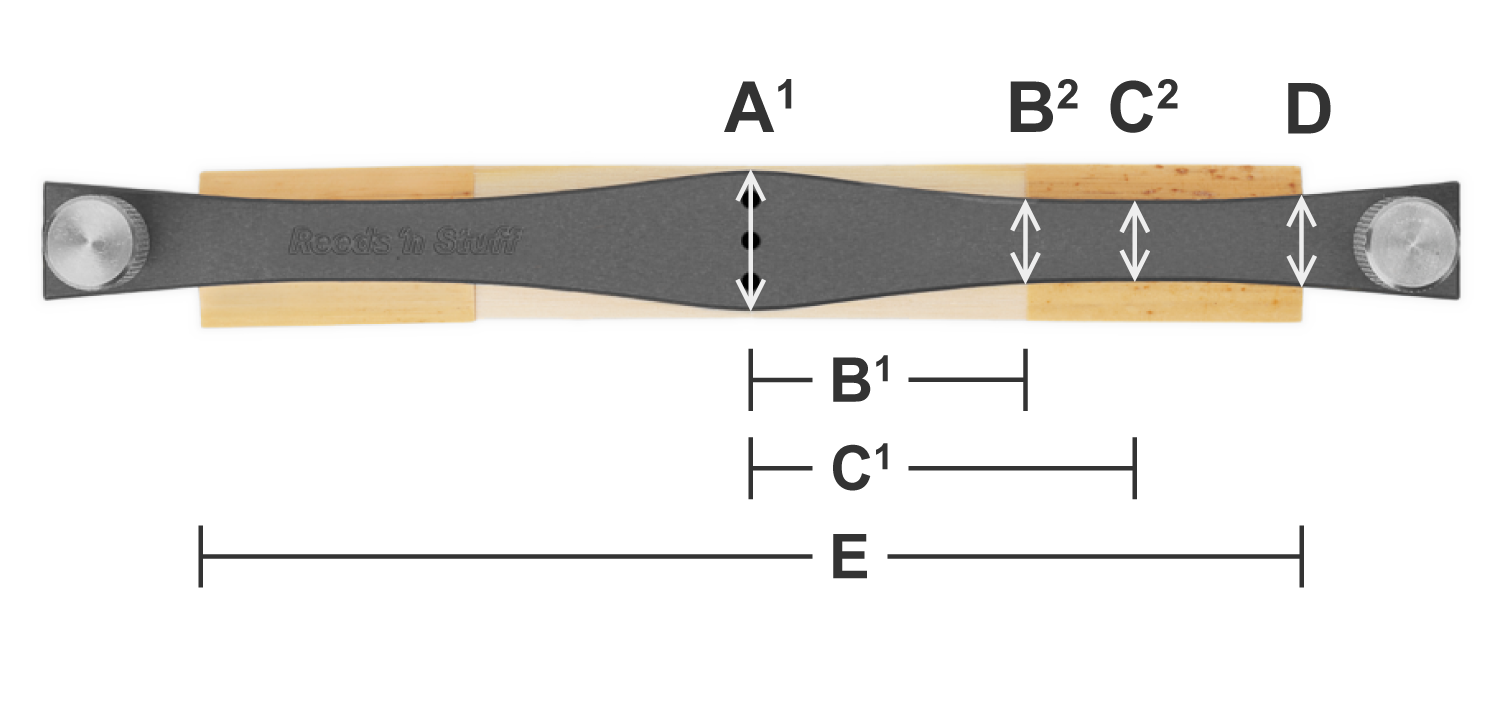
- A1
- 15.0
- A2
- 16.0
- B1
- 30
- B2
- 9.6
- C1
- 42.7
- C2
- 8.6
- D
- 10.5
- E
- 120
- Shaper Style
- Straight
- Note
- Color deviations are possible. These are production-related and do not affect the function.
- Manufacturer
- Reeds 'n Stuff
- Country of origin
- Germany
- Product number
- 1205-000951205-00095
- Legal Guarantee
- According to German consumer protection laws, consumers are entitled to request, free of charge, that the seller repair or replace goods that are defective or do not conform to the purchase contract. Alternatively, consumers may be entitled to a price reduction or a refund of the purchase price. These rights apply for a period of two years from the date the goods are delivered to the consumer. For more information, please click
here.