

Tip Slopes with Prof. Jung Choi

Assistant Professor of Oboe at the University of North Texas
Jung Choi, a native of South Korea, is an oboist recognized for both her performance and teaching. Twice an honorable mention finalist in the Gillet-Fox International Oboe Competition, she made her concerto debut at 16 and has since appeared as soloist with ensembles including the Seoul Yego Orchestra, Seoul Chamber Orchestra, and Eastman Philharmonia. Internationally active as a chamber and orchestral musician, she has performed across Europe and Asia. She served as oboe/English horn with the Binghamton Philharmonic and as assistant principal oboe of the Korean Symphony Orchestra.
An experienced educator, Choi has taught at Nazareth College, Roberts Wesleyan College, Seoul National University, and Missouri State University, and has presented collegiate master classes. She is currently the Assistant Professor of Oboe at the University of North Texas in Denton, TX. An active chamber musician, she is an active member of the Piri oboe ensemble, Ensemble Sunyul and Ensemble Noree, and has also recorded for film, musicals, K-pop, and Korean national television.
Starting the Finishing
The first step after tying an oboe reed is establishing the initial slope. This stage forms the structural foundation of the reed and strongly influences how the reed will vibrate, respond, and balance across all registers. By shaping the slope before detailed scraping begins, the two blades settle evenly and naturally against one another, creating a stable and predictable base for the rest of the finishing process.
In this article, the slope refers to the transition area between the bark and the tip of the reed. The heart refers to the slightly thicker central area that provides stability, resistance, and core sound.
(If you are not using a straight shaper, trimming off the ears would complete this preliminary stage.)
Scrape
I begin scraping the slope approximately 3–4 mm below the fold. The process happens in several stages:
First, scrape upward toward the tip. Then remove slightly more cane from the upper half of the slope to create a gradual decline.
Use light diagonal brush strokes outward across the scraped area to keep the center slightly fuller while allowing the sides to taper thinner.
Inspect
When building the slope, always check the profile and top of the fold from the front carefully. The cane should taper toward the tip and follow the natural curve of the fold and taper toward the sides. In a finished reed, the very tip and the outer edges should be the thinnest areas, while the center remains slightly fuller.
The goal at this stage is not to create a finished tip immediately, but to establish a smooth and balanced transition from bark to tip. A balanced slope creates a tip that is centered, stable, and capable of vibrating freely from the very beginning of the finishing process.
Why Does the Slope Matter?
A properly formed slope allows vibration to begin naturally at the tip rather than deeper inside the reed. This creates a freer and more efficient response and allows the vibration to travel cleanly through the reed.
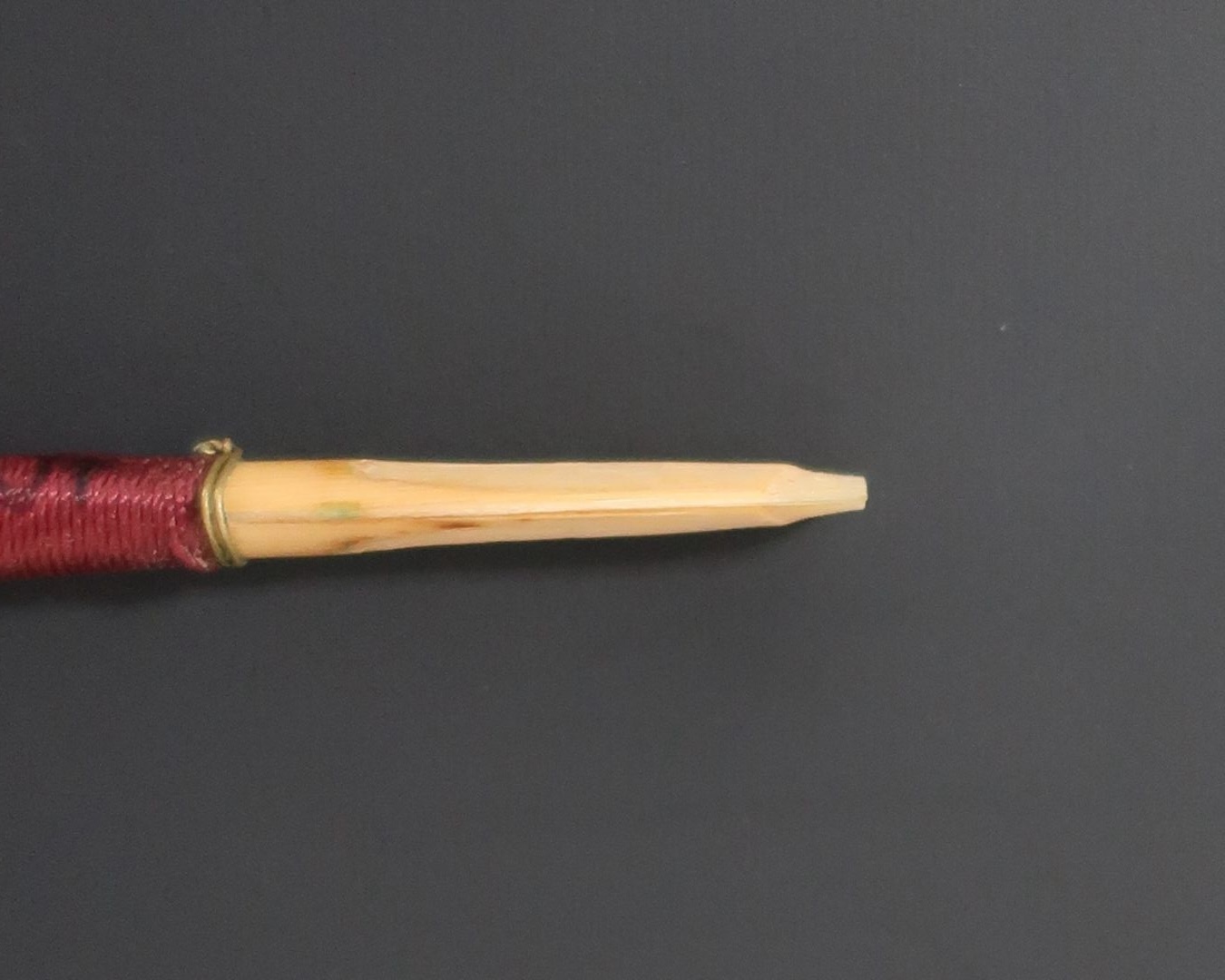
Step
The steepness of the slope can vary depending on personal preference. Some oboists prefer a sharper transition creating more of a cut in to the tip.
The deeper step makes the inside of the tip (the top of the spine) thinner, which increases vibration and therefore requires a slightly shorter tip to maintain balance.
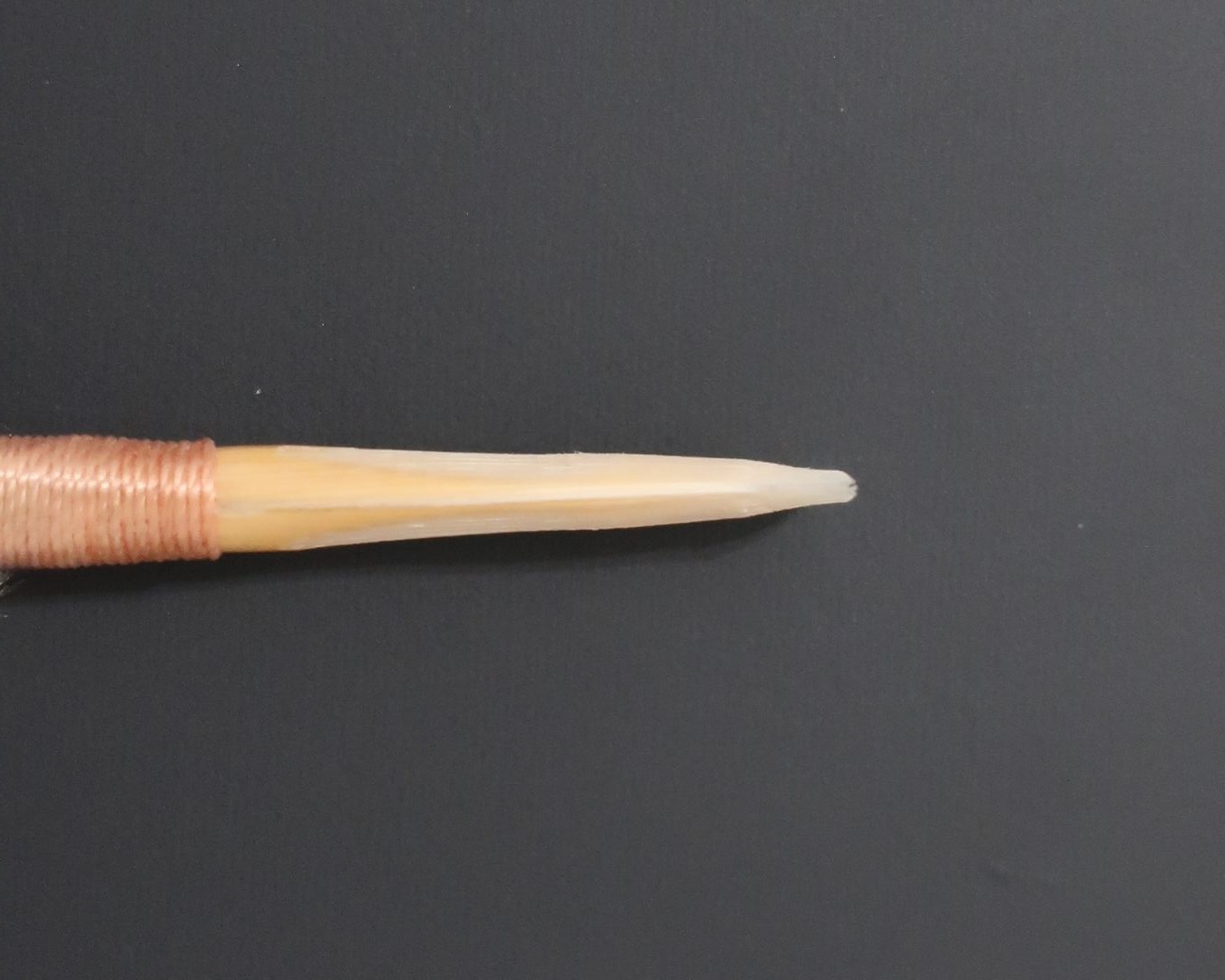
Smooth
Other oboists prefer a smoother inclination where the tip has more of a transition to the heart. Important is that the transition from bark to tip is clean and well defined.
A smoother step allows the area just above the spine to be balanced more gradually and provides greater flexibility in shaping the tip, which in most cases tends to be slightly longer to achieve a smoother transition. When fine-tuning the reed, remember to weaken the corners of the tip as needed to help control vibration.
Building Stability Early
Establishing the slope early saves time later in the finishing process. A well-formed slope reduces the need for corrective scraping and helps the reed remain centered and stable as refinement continues. Without a properly established slope, later adjustments often become less predictable, and the reed may begin to feel tight, unstable, or resistant.
Because the initial slope influences nearly every later adjustment, patience during this stage is essential. Small differences in thickness and taper can dramatically affect both sound and response.
Using a Profiling Machine

For reed makers seeking additional consistency, a profiling machine can be used to establish the initial slope.
A machine can create a smooth and even transition all the way to the tip while avoiding bumps or irregularities in the scrape. This can make later adjustments faster and more efficient, especially when working to maintain consistency across multiple reeds.
2026年08月21日
Interview Oboe How To