

Making Bassoon Reeds with Pierre Martens
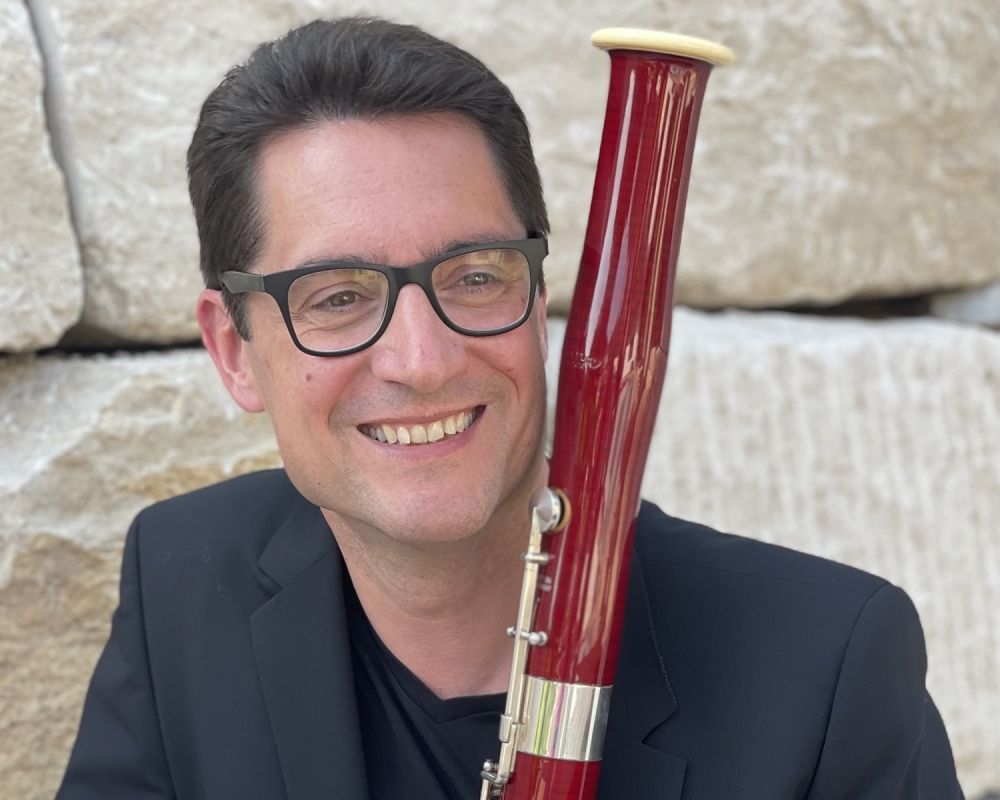
Professor at the Lübeck University of Music
Pierre Martens studied at the Conservatoire Royal de Musique de Bruxelles and at the University of Music in Karlsruhe. His career as an orchestral musician began in 1997 when he took up the position of principal bassoonist with the Vlaams Radio Orkest in Belgium; in 2000, he moved to the Bamberg Symphony Orchestra in the same position.
Pierre Olivier Martens has won numerous national and international music competitions, and several composers have dedicated new bassoon works to him. As a soloist, the sought-after musician has performed with a wide variety of European orchestras on famous stages (Tonhalle Zurich, Palais des Beaux-Arts Brussels, Schleswig Holstein Music Festival, Victoria Hall Geneva, etc.) and has participated in various CD, radio, and television productions. Pierre Martens taught at the University of Ghent (Belgium) and the University of Music Nuremberg-Augsburg before accepting a position at the Lübeck University of Music. Since 2015, his main activity has been as a professor at the Lübeck University of Music. He regularly teaches master classes in Portugal, Belgium, Germany, Switzerland, Brazil, Japan, China, Taiwan, Korea, and other countries.
A well used pregouging machine not only makes our lives easier, it prolongs the life of the blades on your gouging machine. Watch as Pierre Martens walks us through the process, making sure each piece is properly set up to continue on its journey to become a reed.
Before you gouge, the cane must be cut to the correct length. This is where we also do a good amount of cane selection. When cutting the cane to length we are looking for the straightest section of the piece of cane. We are looking to exclude any segment that bends up, down, left, or right.
Gouging is where we continue our recipe for success. Looking for certain characteristics in your reed? Then gouge your cane accordingly, matching what you are looking for to the characteristics of the piece of cane.
Further define and refine the cane with the use of a fully customizable profiling machine. Pierre shows us not only how to use and adjust the profiling machine, but also how to adjust your settings in order to make reeds that are more suitable to chamber music, orchestral, or even solo playing.
The final step. By using a tip profiling machine, after soaking the blank for 15 - 30 seconds, Pierre eliminates most of the guesswork in reed making - ensuring as much consistency as possible from reed to reed. Watch Pierre reveal his personal method of using the tip profiling machine to make sure he gets a reed that matches his expectations, every time.
Reed Recipe
Check out Pierre's reed recipe for how he makes reeds, including wire placement, conveniently collected as a quick reference. If you're looking for these pages but blank, head over to our Reed Journal.
2026年04月27日
Interview Bassoon How To