

Norman vs. Herzberg
Bassoon Legend
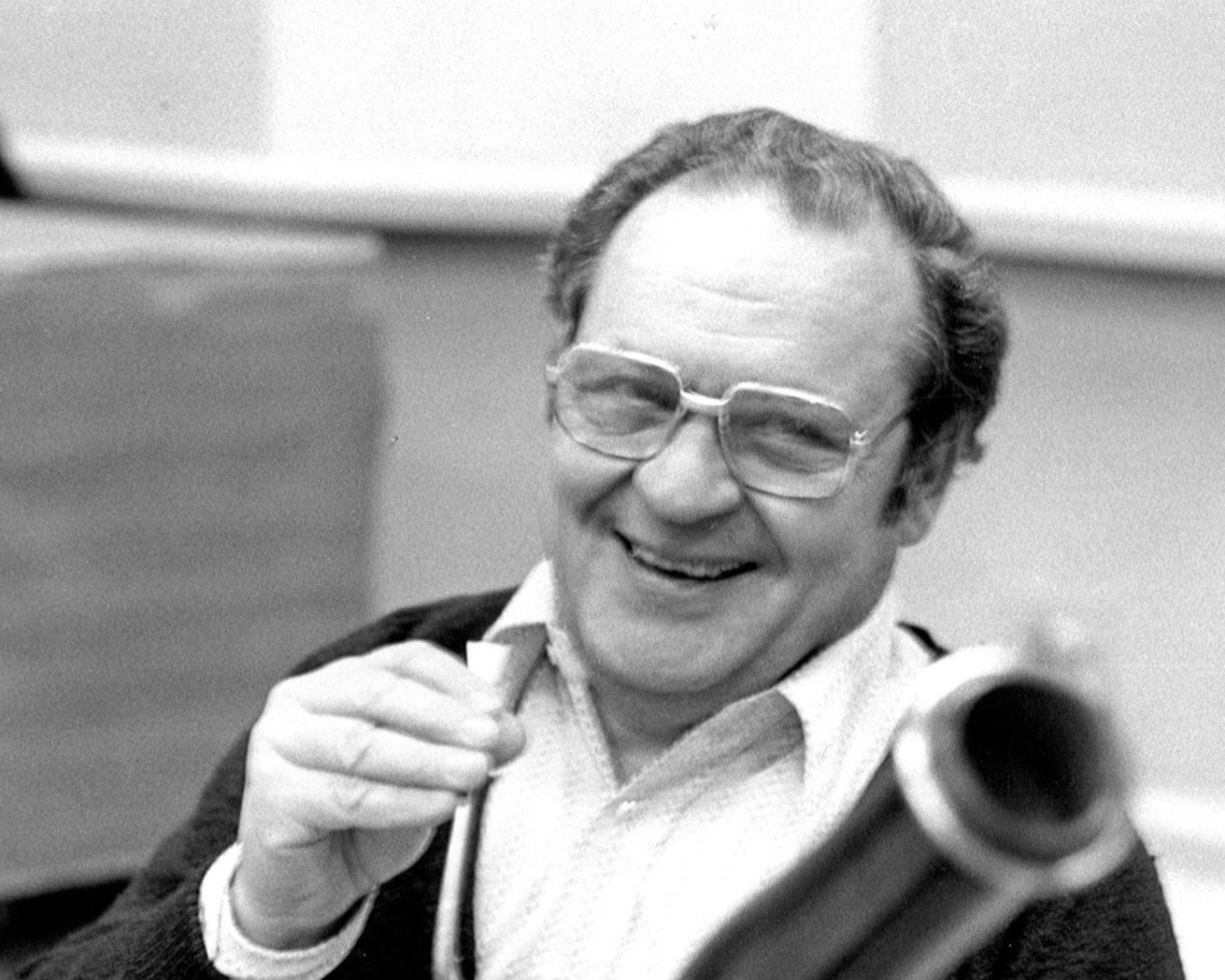
Norman H. Herzberg (1916–2007) was one of the most influential American bassoonists and bassoon teachers of the twentieth century. His career joined orchestral playing, recording studio work, chamber music, university teaching, and a lifelong investigation into the bassoon reed. To generations of bassoonists, his name represents not only a style of playing, but a disciplined way of thinking about reeds, tools, and musical preparation.
Herzberg was born in Cleveland, Ohio, and began his musical life as a saxophonist before taking up the bassoon as a young student. He studied at Interlochen and later at the Eastman School of Music, where his work with Vincent Pezzi became a formative influence. His professional career included early orchestral work, service in the United States Coast Guard Academy Band during World War II, and, after the war, a long musical life in Los Angeles. He played in film, television, and recording work, was associated with Warner Brothers, recorded with major conductors and ensembles, and served as principal bassoonist of the Los Angeles Chamber Orchestra. He also taught for many years at the University of Southern California and at summer programs including the Music Academy of the West and Aspen. His students went on to occupy major orchestral and teaching positions, making his influence unusually wide and lasting.
Background
Herzberg taught reed making as an integrated practice, connecting the reed, player, instrument, and disciplined playing. A reed was understood not just by appearance or measurements but by how it responded to testing and adjustment. Because cane is inherently variable, he sought control over every other factor – shape, profile, blank, wire placement, bevel, seasoning, and trimming – treating reed making as a system of interacting elements. His approach emphasized practical discipline, careful measurement, and controlled variation.
A lasting contribution was his insistence on symmetry, repeatability, and mechanical precision, exemplified by the Herzberg Profiler/Shaper. This tool produces accurate, consistent blanks and reflects his teaching philosophy. The original shaper remains important not just for its outline but for its geometry, which supports his system; features like the butt flare, wire positions, and bevel are vital to the reed-making method he developed. The technical section that follows explains why these details are important.

The Norman shape, made by Reeds ’n Stuff, is offered in that spirit: as a careful effort to preserve and make usable the working geometry of Herzberg’s original shaper combined with modern production techniques. It is not presented as a substitute for Herzberg’s teaching, nor as a complete summary of his artistry. Rather, it is a tribute to a method whose value depends on precision, proportion, and respect for the relationships built into the original design.
Herzberg’s legacy endures because it was never only about a reed shape or a machine. It was about a way of working: exact, curious, disciplined, and musical.
The Herzberg Reed System
Norman Herzberg’s reed-making method is a coordinated system. The shape, the position of the cane on the shape, the collar, the butt cut-off, the wire placements, the bevel, and the final trimming all relate to one another.
The purpose of the system is precision and repeatability. Cane itself is variable, so Herzberg sought to make every controllable part of the reed as accurate as possible. The goal was not to make reeds by formula alone, but to create blanks whose measurements were reliable enough that the reed maker could understand what the cane itself was doing.
The Shape
A central point of the Herzberg system is that the measurements are taken from the fold. The reed is not first understood as a finished object measured from the tip. Instead, the reed maker establishes where the shaped cane will be used by measuring from the fold to the collar, from the fold to the butt cut-off, and from the fold to the wire placements. This is one of the defining features of the Herzberg method.
The original Herzberg shape has two important features that make this possible:
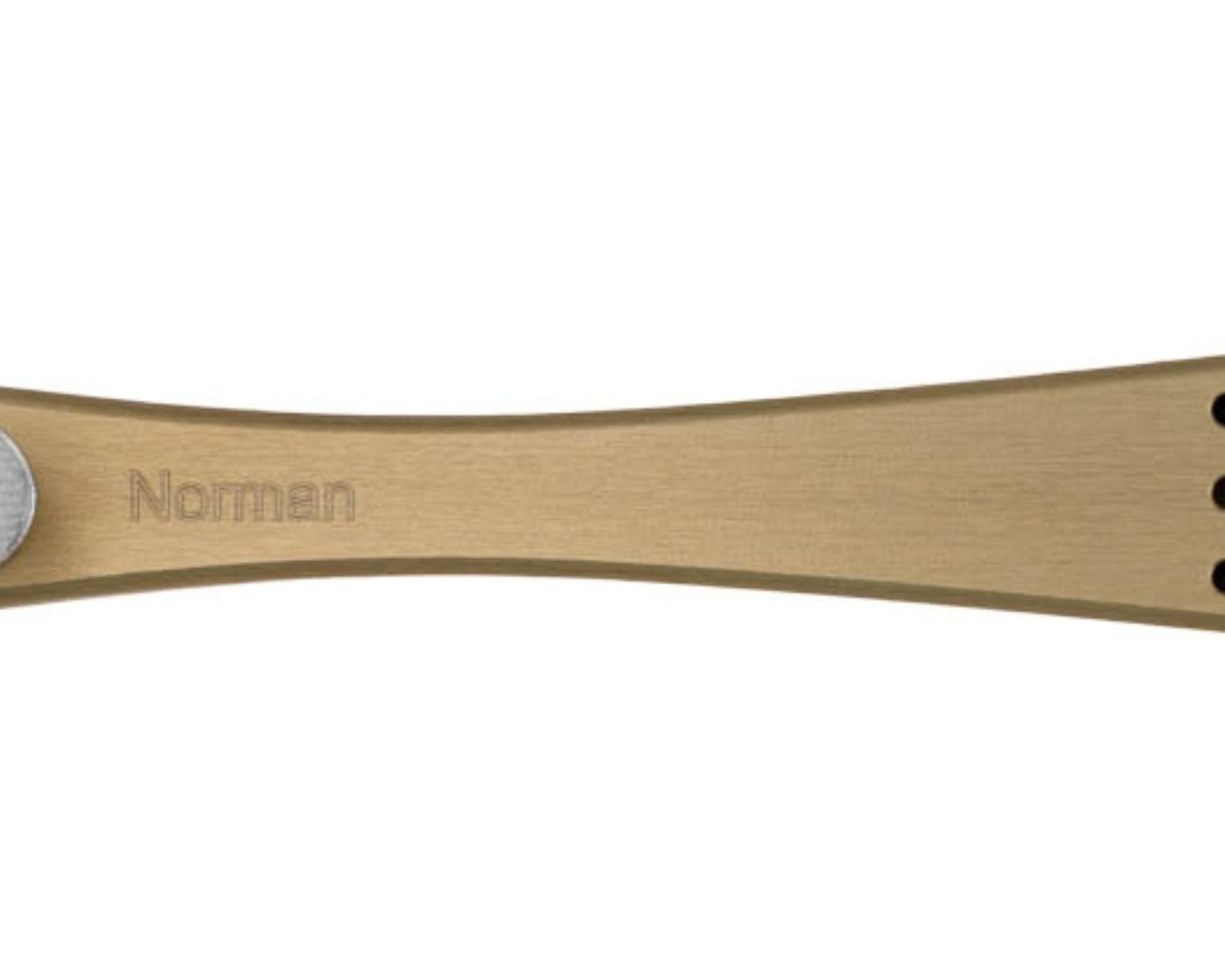
It has an extended narrow region rather than a single abrupt narrow point. The reed maker can move the working reed forward or backward on the shape while preserving the internal relationships among the collar, butt, wires, bevel, and tip.
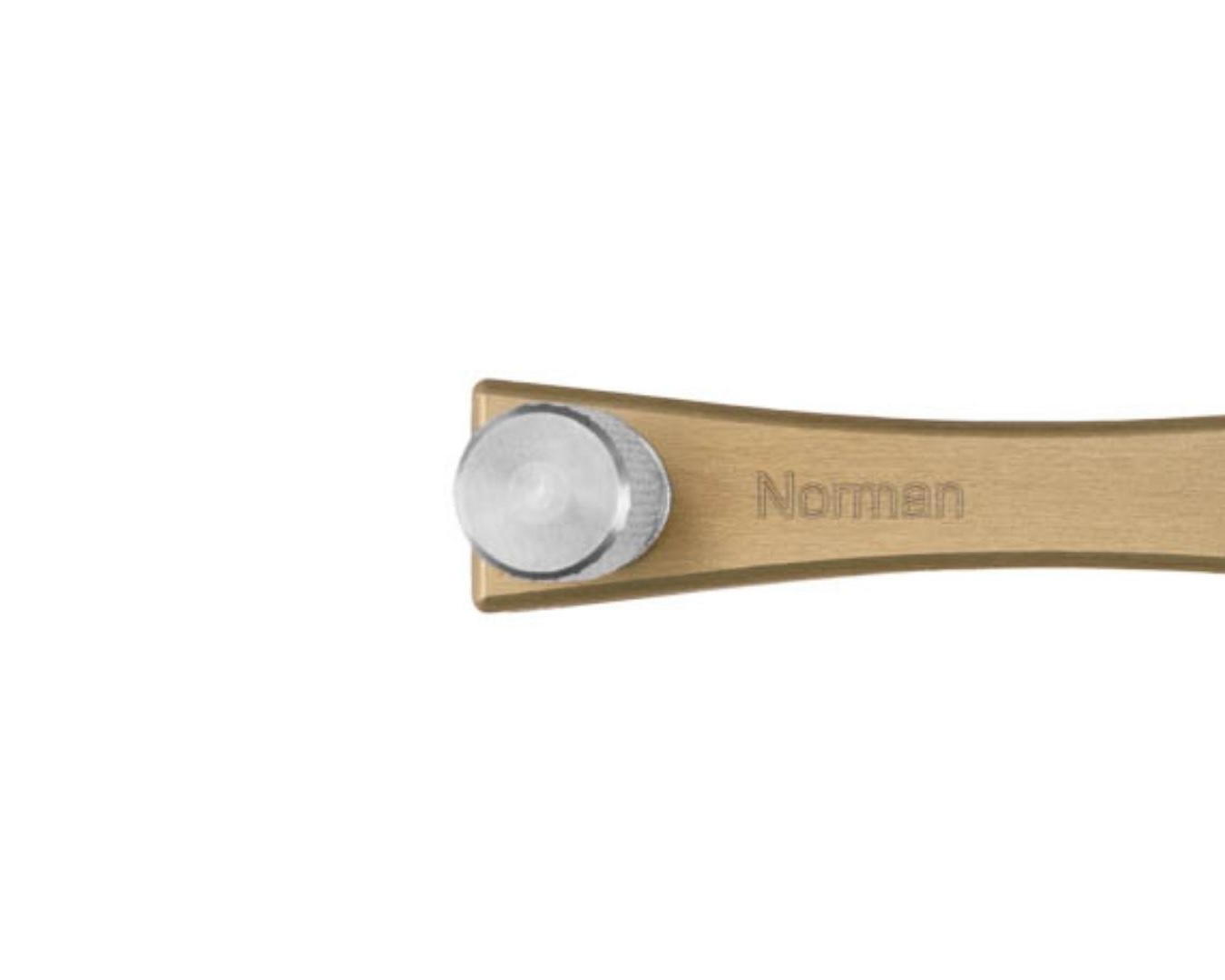
It has sufficient flare at the end to support the Herzberg bevel methods.
Many Herzberg-style copies miss one or both of these features, which limits the method. A single narrow point reduces the reed maker’s ability to move the reed forward or backward on the shape. Insufficient end flare makes it difficult to execute the bevel without weakening the tube or compromising the fit on the bocal.
The Norman shape was made specifically to address this problem. It was copied from two original Herzberg shapers, sourced and provided by Matthew Harvell, in order to recover the functional geometry and positioning flexibility of the original Herzberg system.
Our existing Herzberg shaper already reflects the general geometry and proportions that many reed makers have come to associate with the Herzberg tradition, and the differences between it and surviving original Herzberg shapers are relatively minor in practical use. The Norman shape is intended for those who specifically want an especially faithful reproduction of surviving original Herzberg shapers, which today are difficult to obtain, exist in limited numbers, and are often traded privately at considerable expense.
It is important to note that the Norman shape is not intended to replace our existing Herzberg shape. Our current Herzberg shaper represents the version of the Herzberg outline that many reed makers have come to know and use over the years, as original Herzberg shapers have long been scarce and difficult to obtain. For most players, it remains the familiar Herzberg shape. The Norman shape was developed for those seeking a closer reproduction of the original Herzberg geometry – whether for historical accuracy, to explore Herzberg's reed-making system as it was originally conceived, or simply to have access to an accurate reproduction that is both available and affordable.
Positioning Variations on the Herzberg Shape
The following measurements describe three useful positions on the Herzberg shape. Herzberg often used a mixture of English and metric measurements, so both systems are shown here.
Standard variation
Collar from fold: 30 mm (1.18 in)
Butt cut-off from fold: 2 10/32 in (58.74 mm)
First wire center from fold: 1 10/32 in (33.34 mm)
Second wire center from first wire: 10/32 in (7.94 mm)
Bevel: 3/8 in (9.53 mm) from butt
Third wire center: 3/16 in (4.76 mm) from butt
Tip cut: 28 mm (1.10 in) from first wire
Wide variation
Collar from fold: 28–28.5 mm (1.10–1.12 in)
Butt cut-off from fold: 2 8/32 in (57.15 mm)
First wire center from fold: 1 8/32 in (31.75 mm)
Second wire center from first wire: 10/32 in (7.94 mm)
Bevel: 3/8 in (9.53 mm) from butt
Third wire center: 3/16 in (4.76 mm) from butt
Tip cut: 28 mm (1.10 in) from first wire
Narrow variation
Collar from fold: 31 mm (1.22 in)
Butt cut-off from fold: 2 11/32 in (59.53 mm)
First wire center from fold: 1 11/32 in (34.13 mm)
Second wire center from first wire: 10/32 in (7.94 mm)
Bevel: 3/8 in (9.53 mm) from butt
Third wire center: 3/16 in (4.76 mm) from butt
Tip cut: 28 mm (1.10 in) from first wire
Note: the third wire is placed in relation to the bevel. In the standard 3/8 inch bevel, the bevel begins 3/8 inch from the butt. The center of the third wire is placed halfway between the butt and the beginning of the bevel. Therefore, the third wire center is approximately 3/16 inch, or 4.76 mm, from the butt.
How the Variations Work
The wide, standard, and narrow versions are not different shapers but different positions on the same shape. Herzberg linked wire placement to the shaper’s flare and the action of the bevel; he also noted that wide blades often benefit from a short bevel, as reduced rail pressure helps prevent corner collapse. The placements described here apply those principles to the original Herzberg shape.
The wide variation generally produces a lower-pitched low register and often a darker sound. The narrow variation generally supports the upper “money” register of the bassoon and may be higher pitched overall. The standard variation sits between these two tendencies.
This flexibility depends on the original Herzberg shape’s extended narrow region. On shapes with only a single narrow point, controlled positional adjustment is far less effective.
Wires
The wires are not merely fasteners. They are part of the adjustment system.
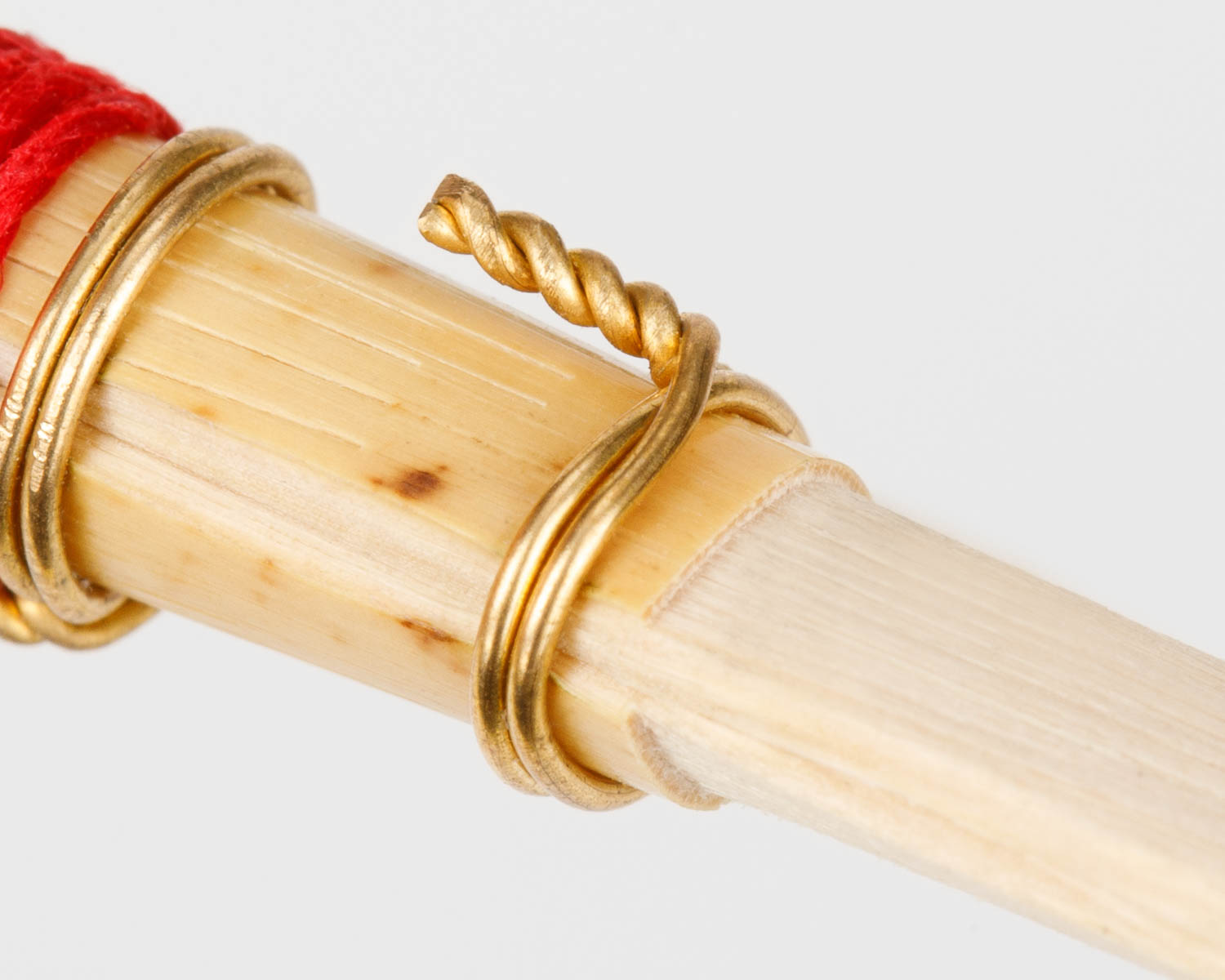
The first wire controls much of the immediate playing opening. In the short-bevel system it will often be somewhat oval, because the 3/8 inch bevel creates an opening effect and the first wire is flattened to bring the reed back to playing opening.
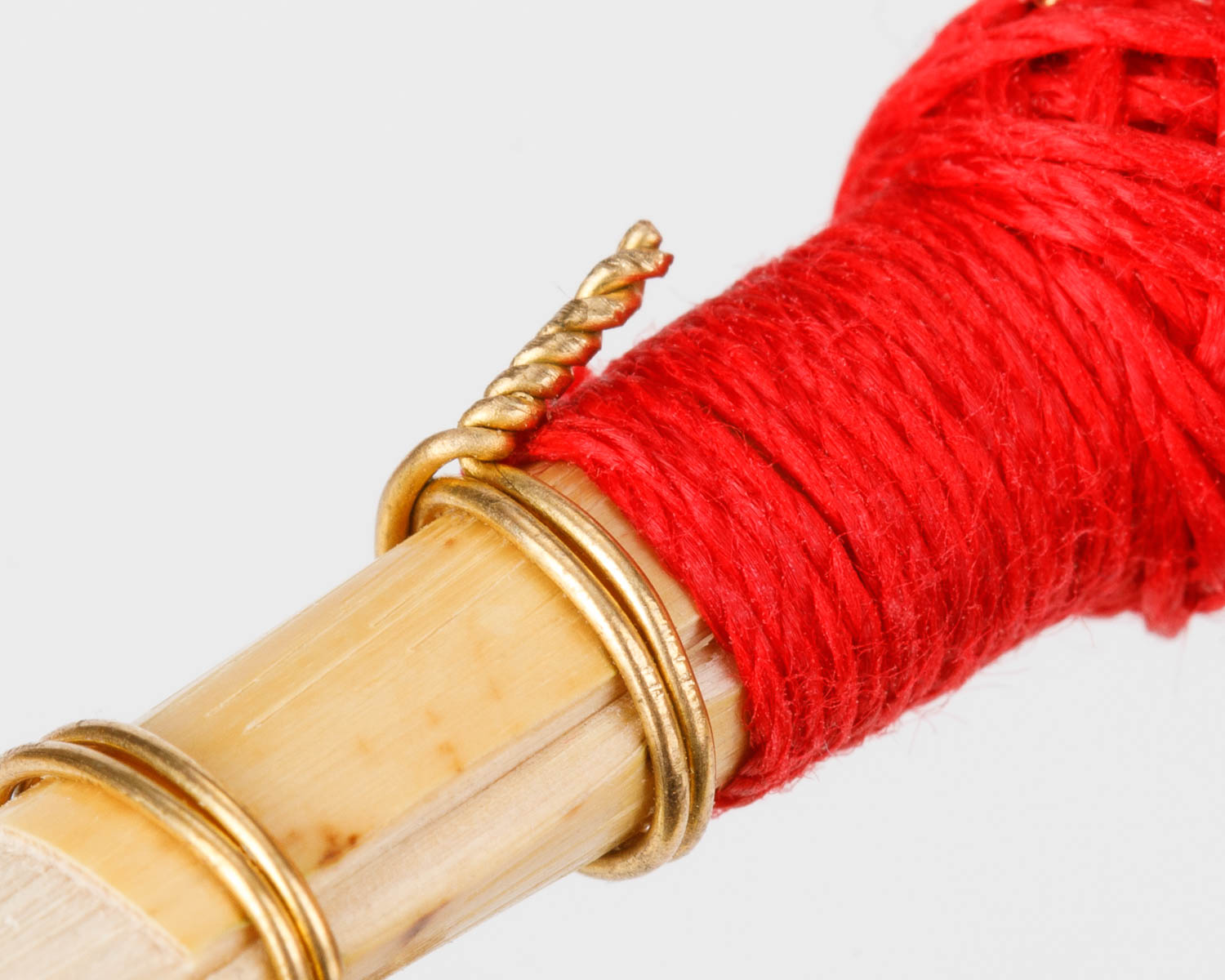
The second wire should begin round and tight. A round second wire strengthens the reed, supports the arch of the blades, and gives the reed maker more room to trim. Flattening the second wire too early removes strength that may be needed later.
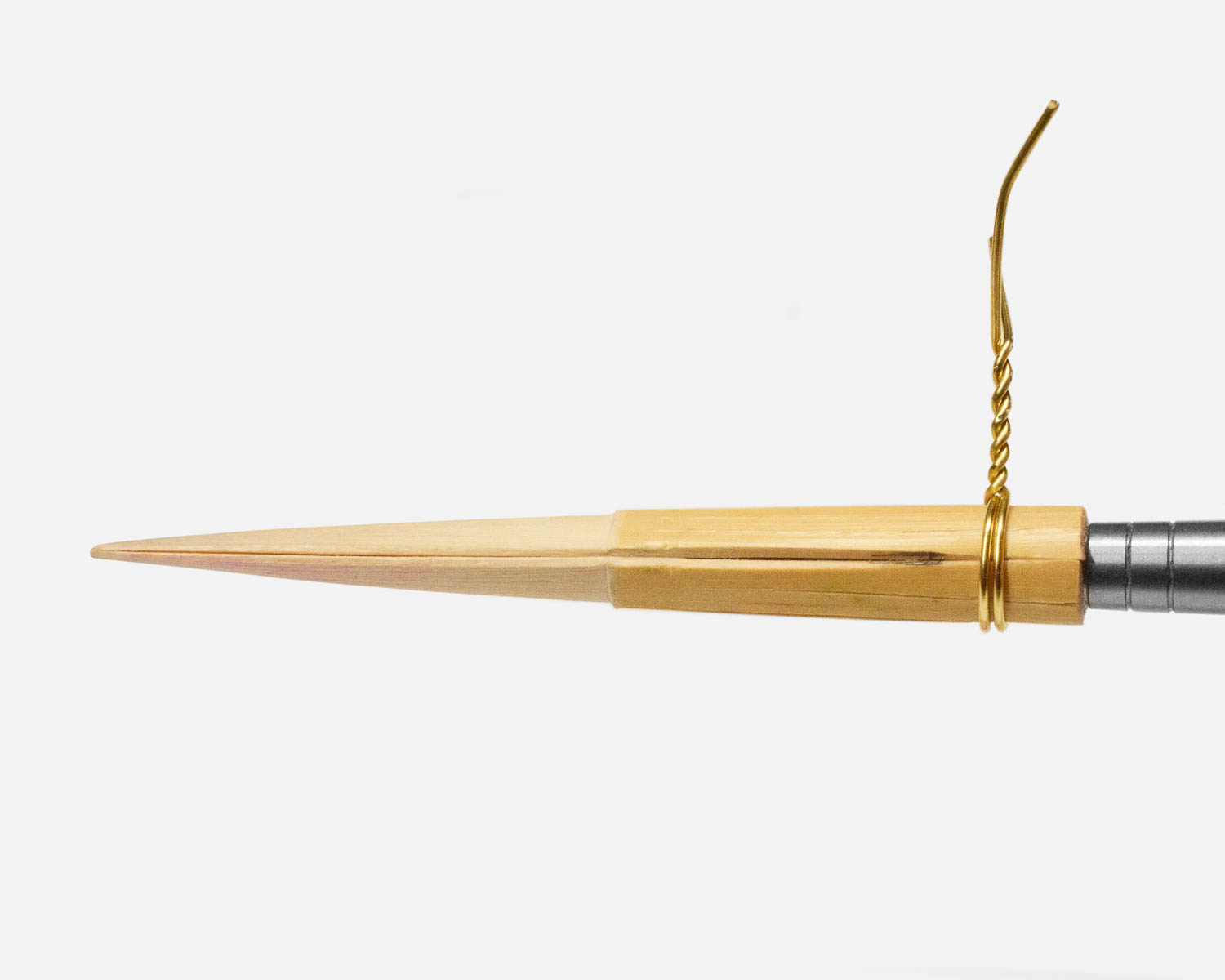
The third wire should also be round and tight. Its function is to activate the bevel fulcrum. Without the third wire, the bevel cannot work as intended.
Herzberg Bevel
The Herzberg bevel is a controlled taper in the lower tube of the reed.
In the standard short-bevel version, the bevel begins 3/8 inch, or 9.53 mm, from the butt. The third wire is placed halfway between the butt and the beginning of the bevel, so its center is approximately 3/16 inch, or 4.76 mm, from the butt.
There is also a long bevel, but it extends only to the second wire, not to the first. This helps high register response and could be used to create "high note reeds." It can also slightly raise the pitch of the reed.
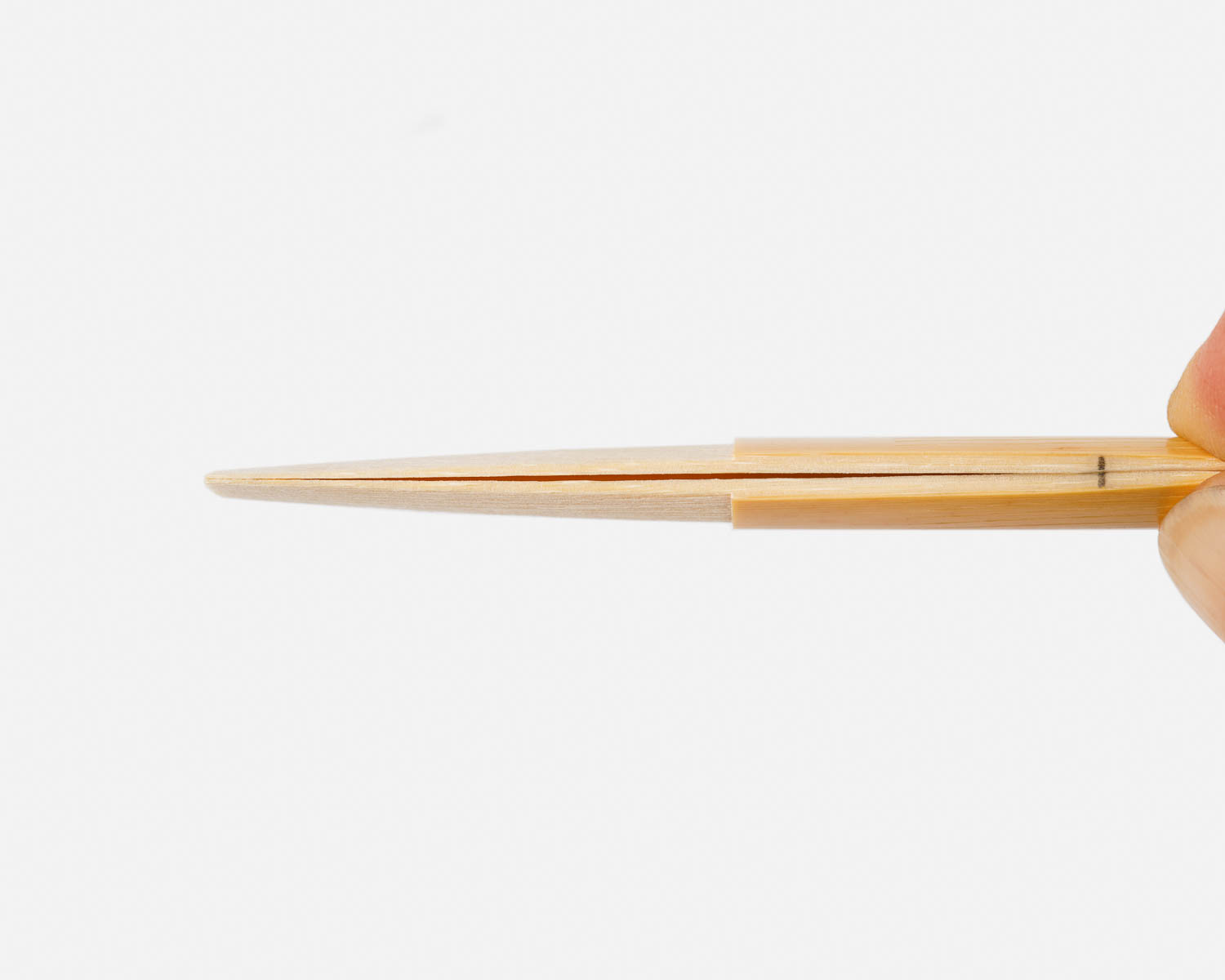
Herzberg explained the effect of the bevel as a lever or fulcrum. The bevel and third wire create a controlled fulcrum in the lower tube, and small changes in the amount or length of the bevel can have large effects on the blade opening.
A correctly made bevel helps the reed maintain openness in the low register while also supporting the high register. It gives the reed maker a way to influence the side opening and lower-tube behavior without relying only on scraping, clipping, or extreme wire adjustment.
Sanded Bevel Method
One clean way to make the Herzberg bevel is to use sandpaper on the edge of a table or a sanding block.
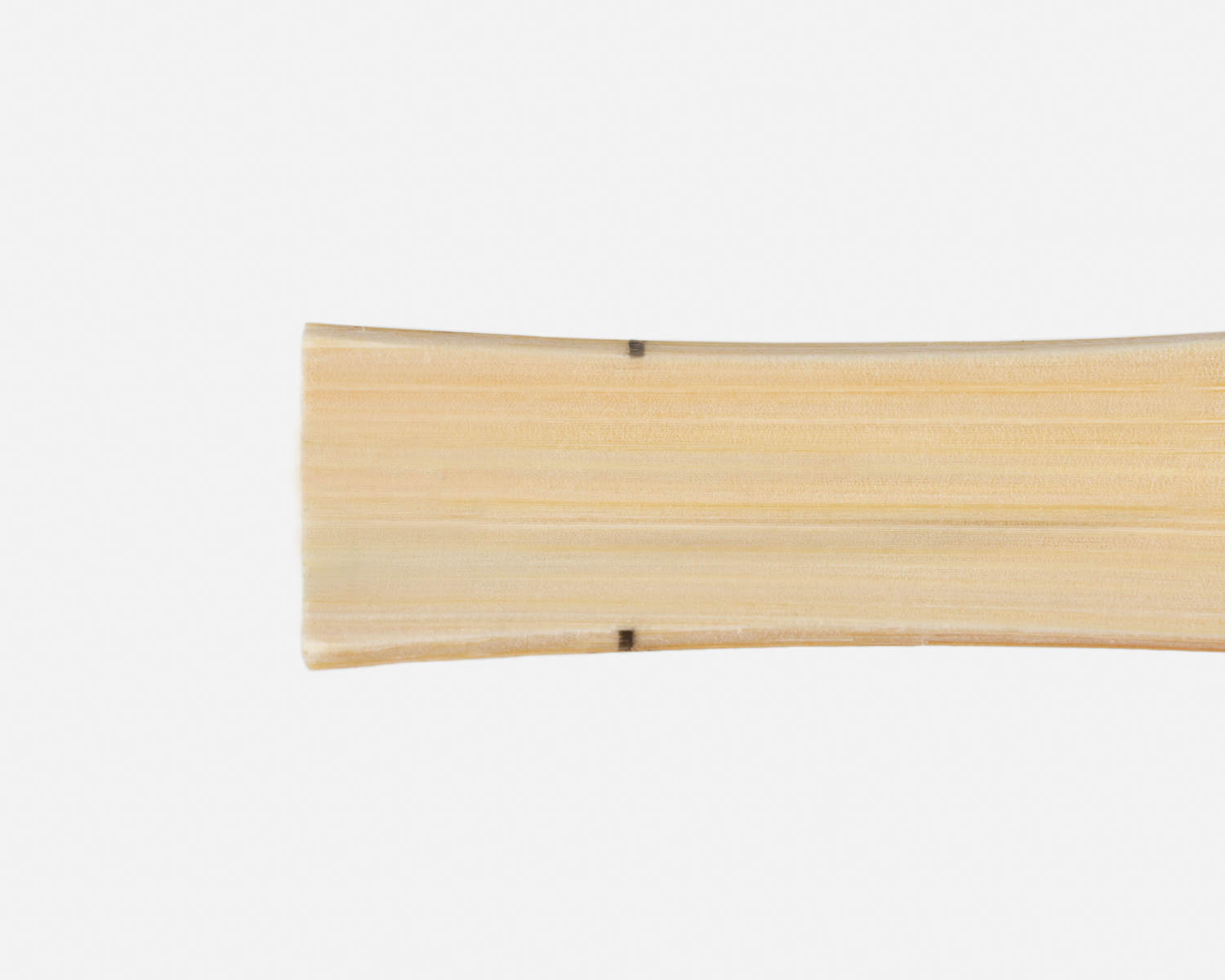
First, mark the bevel length on both sides of the tube. For the standard short bevel, mark 3/8 inch, or 9.53 mm, from the butt. This mark is the forward end of the bevel. The bevel should disappear at this point.
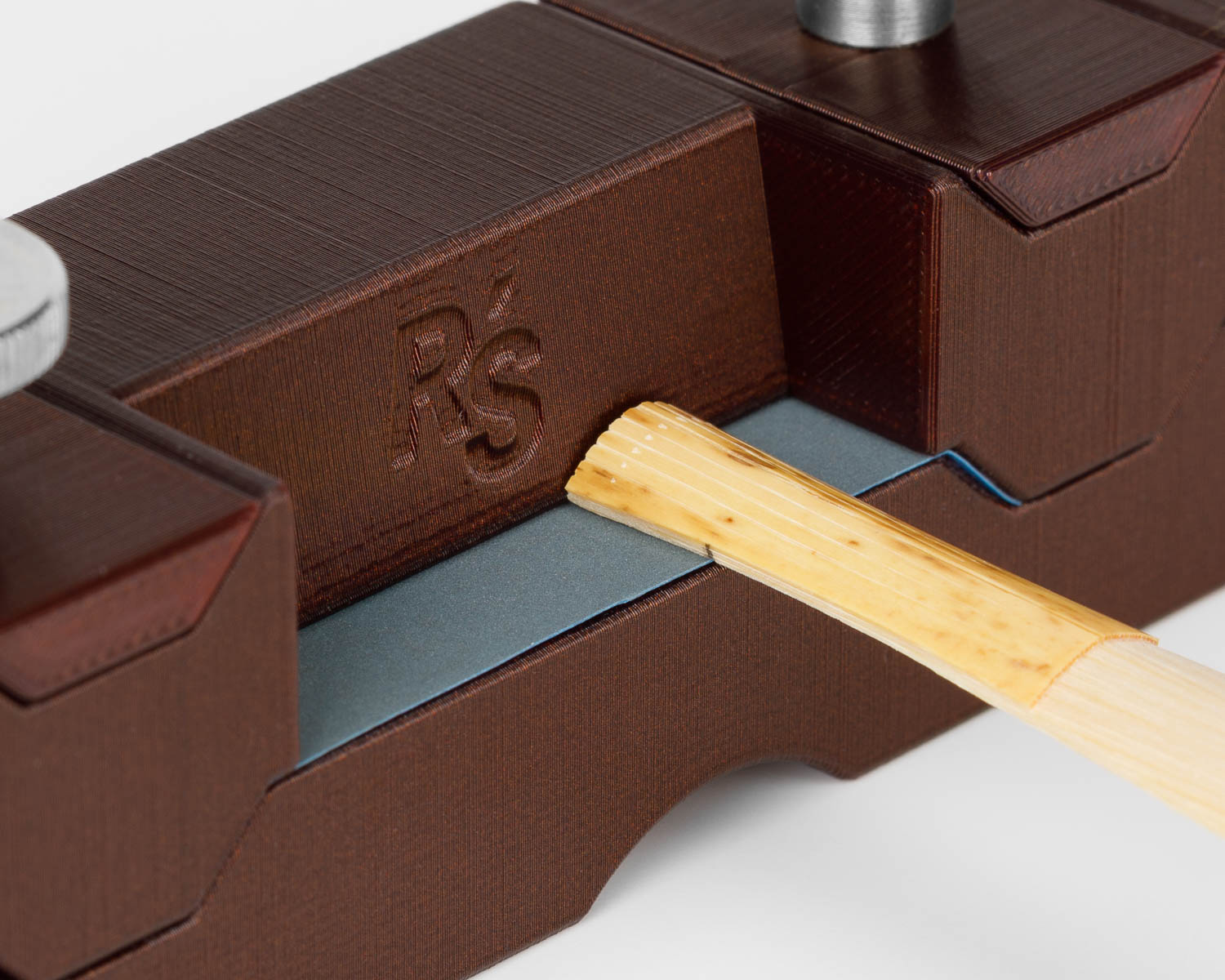
Place sandpaper flat on a table, close to the edge. Hold the opened reed blank so the butt extends over the edge of the table and the tube rail contacts the sandpaper. Sand from the back of the tube toward the bevel mark, with the pressure greatest at the butt and gradually decreasing as the sanding approaches the mark.
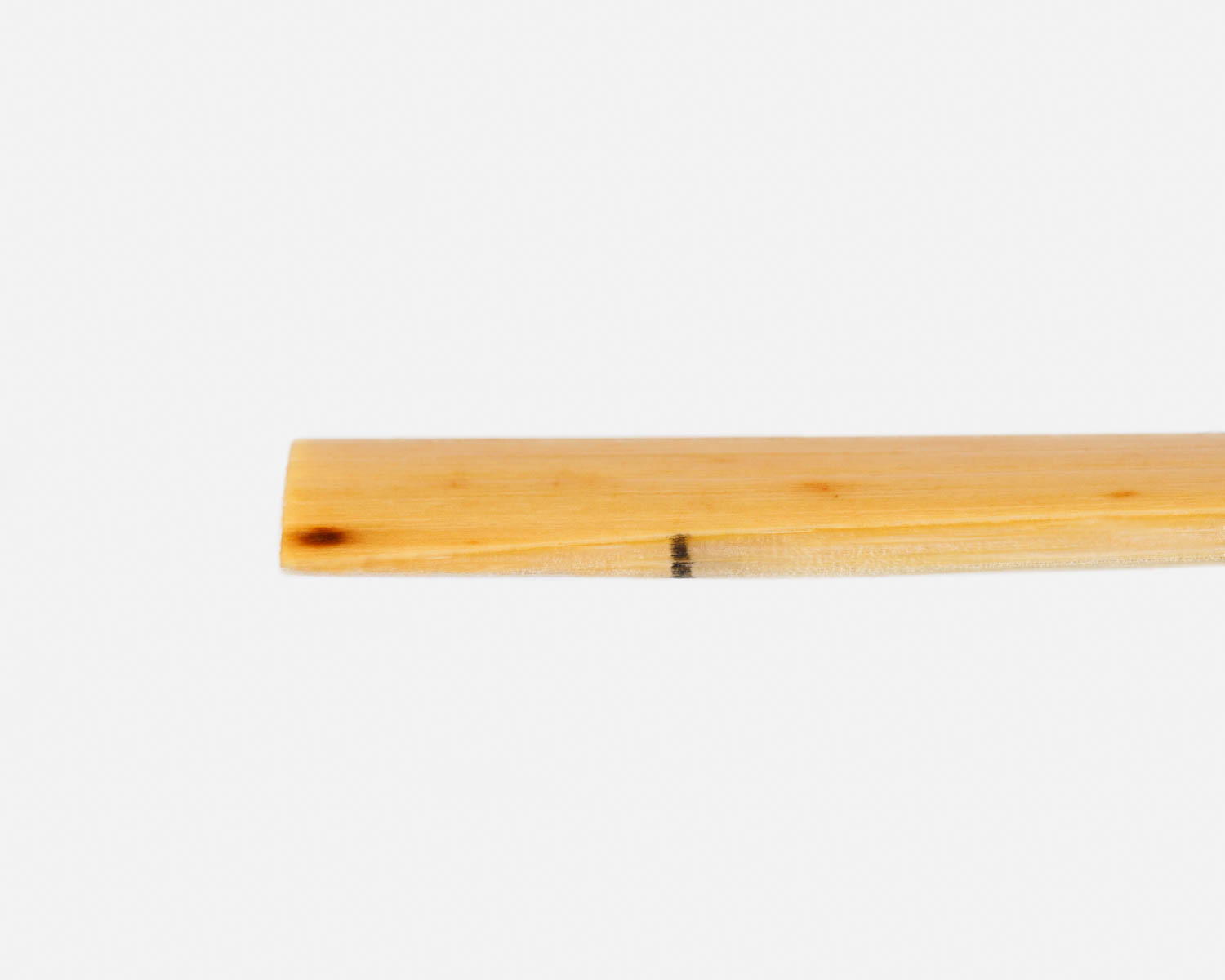
The goal is not to sand a flat spot, but rather a ramp. More material should be removed at the butt. Less material should be removed as the sanding moves forward. At the 3/8 inch mark, the bevel should taper to nothing.
Too Much Bevel
It is possible to do too much bevel. If too much material is removed, or if the bevel is carried too aggressively forward, the sides of the blades may remain too open. When this happens, the reed maker may be forced to compensate by overly rounding the second wire, excessively flattening the first wire, or removing too much cane from the sides of the reed in order to make the high register usable. Those compensations usually weaken the reed and reduce the balance that the bevel was meant to create.
A good bevel should give support and flexibility at the same time. It should help the reed keep openness in the low register without making the sides uncontrollably open, and it should support the high register without requiring extreme wire adjustment or excessive side trimming.
The Shaper and the Bevel Must Agree
The Herzberg bevel works best on a shape with adequate butt flare. The flare gives the lower tube enough width and material to accept the bevel without making the bocal opening too small or the tube walls too fragile. The bevel can be used with other shapers, but the reed maker should beware of the tendency to over-bevel. Without the wider butt of the Herzberg shape, this is easy to do.
This is why the original Herzberg shaper matters so much. The bevel was not an isolated trick added to any reed. It belonged to a shape and wire system that gave the bevel enough room to function. A Herzberg copy that narrows to a single point or lacks enough butt flare may look similar in outline, but it does not fully support the method. Norman was created to restore the original working geometry by copying two original Herzberg shapers, not later derivative versions.
Recommended Order of Operations
- 1. Shape and profile the cane.
- 2. Form the blank and allow it to dry thoroughly on the mandrel.
- 3. After seasoning, remove the temporary wire or wrapping as needed.
- 4. Open the uncut blank.
- 5. Mark the bevel length, normally 3/8 inch from the butt.
- 6. Sand or file the bevel as a taper, deepest at the butt and fading to nothing at the mark.
- 7. Align the blades carefully. No slippage should be allowed. Correctly gouged cane can help, as can careful sanding.
- 8. Apply the third wire first. As the third wire is tightened, slowly move the reed out on the mandrel until the sides of the butt close.
- 9. Loosely place the second wire.
- 10. Add the first wire. Do not pull the wire up as it is tightened; allow the wire to hug the cane. A vise with a mandrel and pin vises for applying the wire can be very helpful in removing gaps between the wires and the cane.
- 11. Place and tighten the second wire, being careful not to cut into the cane.
- 12. Wrap the reed.
- 13. Ream the reed, soak the reed, and cut the tip to the correct length.
Summary
The Herzberg reed is defined by relationships rather than by one fixed finished measurement. The reed maker chooses a position on the shape, measures from the fold, cuts the butt, places the collar, moves the wire system with that placement, and creates a bevel that works with the third wire as a fulcrum.
The original Herzberg shaper makes this possible because it has an extended narrow region and a proper butt flare. The Norman shape exists to recover those features so that the Herzberg system can be practiced as intended. The Herzberg shape, while minimally different, is what most reeds makers have become accustomed to when
Text, several of the pictures, and source materials provided by Matthew Harvell, who studied with Norman Herzberg.
2026年09月24日
Guide Tips-and-Tricks